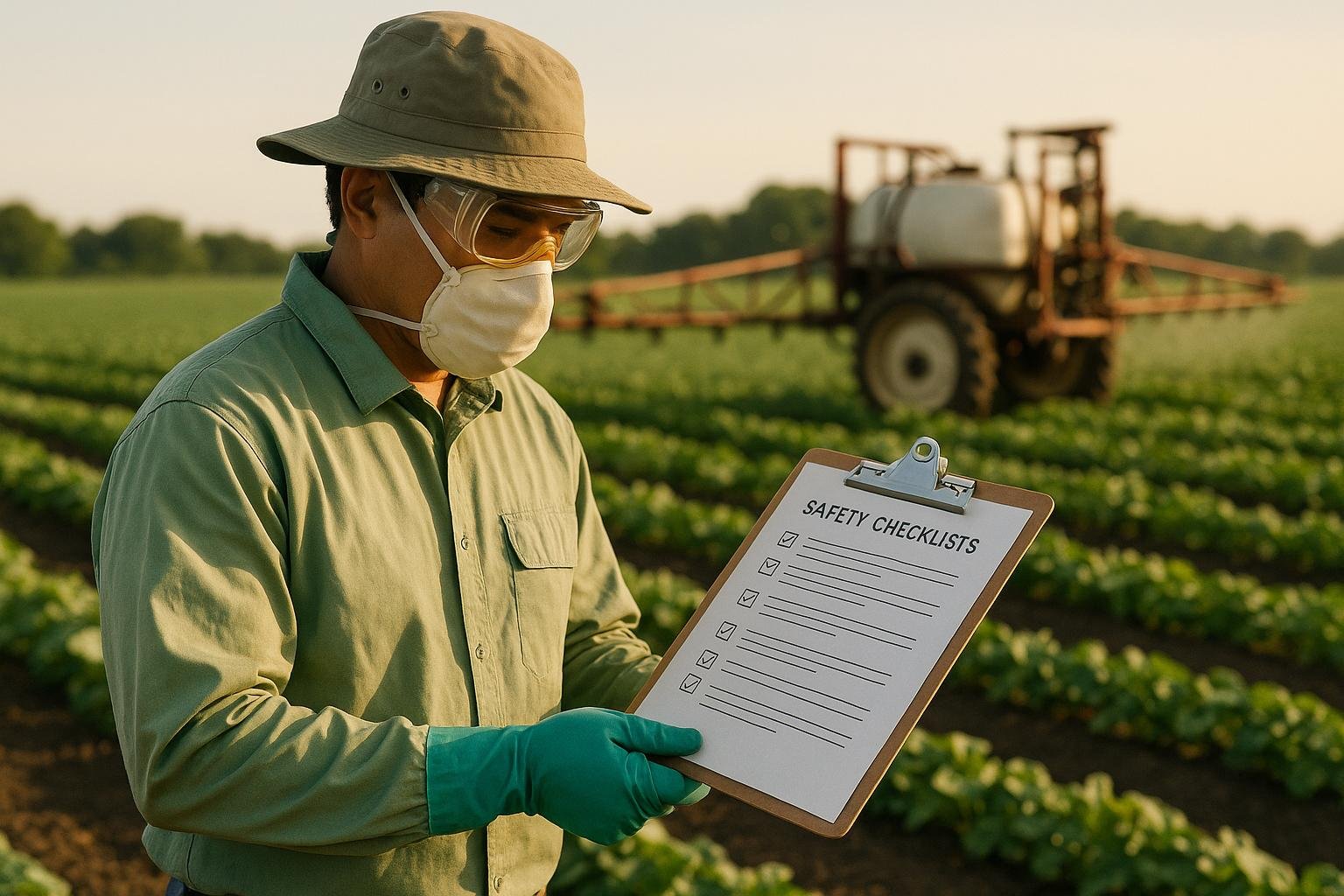
The 2024 Worker Protection Standards (WPS) updates are here to improve safety for over 2 million U.S. agricultural workers exposed to pesticides annually. These changes restore protections weakened in 2020 and introduce new rules to reduce risks. Key updates include:
- Application Exclusion Zone (AEZ): Restores 100-foot zones for fine droplet sprays and extends protections beyond the employer’s property. Spraying must stop if anyone enters the AEZ.
- Family-Owned Farm Exemptions: Immediate family members can remain indoors during applications but must stay within enclosed structures.
- Safety Training: Annual pesticide safety training is now mandatory for all workers and handlers.
- Centralized Information Access: Employers must provide pesticide records, Safety Data Sheets (SDS), and protective gear details at a central location.
- Worker Protections: Retaliation against workers reporting unsafe conditions is prohibited.
These updates, effective December 3, 2024, aim to reduce pesticide exposure while balancing practical needs for farms. Employers must comply with AEZ rules, maintain clear records, and provide proper training to avoid penalties. For guidance, the EPA offers training materials and interim support.
Worker Protection Standard (WPS) for Pesticide Handlers
Major Changes in the 2024 Worker Protection Standards
The 2024 updates bring back earlier protections while introducing new measures to enhance worker safety. These changes reverse aspects of the 2020 rule that reduced safeguards and restore key protections first established in 2015.
Updates to the Application Exclusion Zone (AEZ) Rule
One major change is the reinstatement and expansion of the Application Exclusion Zone (AEZ) protections. The 2020 rule had scaled back the AEZ for certain ground-based spray applications from 100 feet to 25 feet, limiting its coverage to the agricultural employer’s property. This left neighboring areas and adjacent workers at risk. The updated rule restores the 2015 provisions, extending AEZ protections beyond the employer’s property line. Now, pesticide handlers must monitor both on-farm and nearby areas, halting applications if anyone enters the AEZ. Spraying can only resume once the zone is clear.
An additional update introduces an immediate family exemption for family-owned farms. Farm owners and their immediate family members are allowed to remain inside enclosed structures or homes within the AEZ during pesticide applications. However, this exemption applies strictly to the owner and their immediate family – not to employees or hired workers. These changes aim to balance safety with practical considerations for family farms.
New Droplet Size and Distance Standards
The 2024 standards also establish clear, science-backed guidelines for determining AEZ distances based on droplet size and spray height. Using standards from the American Society of Agricultural and Biological Engineers, the rule specifies:
- A 25-foot AEZ for pesticides applied with medium or larger droplets from heights over 12 inches.
- A 100-foot AEZ for applications using fine droplets.
- No AEZ requirement when pesticides are applied at or below 12 inches.
These criteria encourage applicators to evaluate their equipment and adjust techniques to meet these distance requirements, ensuring safer application practices.
Updated Safety Training and Information Access
The 2024 updates also emphasize the importance of training and access to safety information. Agricultural employers must now provide annual pesticide safety training for all workers and handlers. This training ensures workers are informed about the latest safety procedures, how to prevent exposure, and what to do in emergencies.
Employers are also required to set up a centralized information station that is accessible during work hours. This station must include key details about pesticide applications, such as Safety Data Sheets (SDS), product labeling information, and guidance on early entry tasks and necessary personal protective gear. Additionally, the rule explicitly prohibits retaliation against workers who request safety information, report exposure incidents, or raise concerns about unsafe practices.
Compliance Requirements for Agricultural Employers
Agricultural employers have clear responsibilities under the 2024 Worker Protection Standards. These updated regulations emphasize safety and legal compliance, building on the revised Application Exclusion Zone (AEZ) and training protocols.
Required Application Suspension in AEZ
If anyone enters the Application Exclusion Zone during pesticide application, the work must stop immediately. This rule applies to everyone – whether it’s a worker, a neighbor, or someone who accidentally enters the area.
Pesticide handlers are responsible for monitoring both the worksite and surrounding areas, ensuring applications only resume once the AEZ is clear. Employers should set up clear communication systems, such as visual markers, radios, or designated spotters, to help handlers detect and address any breaches. The AEZ boundaries depend on the type of pesticide spray: 25 feet for medium or larger droplets and 100 feet for fine droplets. If anyone enters the zone, operations must stop immediately.
Restricted-Entry Intervals (REI) and Early Entry Protections
After pesticide application, treated areas are off-limits during the Restricted-Entry Interval (REI). This waiting period varies by pesticide and is clearly listed on each product label. Employers must track these intervals for every pesticide used and ensure workers know when it’s safe to return to treated areas.
In some cases, workers may need to enter treated areas before the REI ends. For these situations, employers are required to provide detailed information about the pesticide, explain which tasks qualify as early entry work, and supply the necessary personal protective equipment (PPE). The type of PPE depends on the pesticide and the task being performed.
Proper training on PPE use is essential. Workers need to know how to correctly put on and remove equipment to avoid contamination. Employers should keep detailed records of REI periods for each treated area, noting the pesticide name, application date, location, and when it’s safe for workers to re-enter.
Worker Protection from Retaliation
The 2024 standards also protect workers from retaliation. Employees have the right to refuse unsafe work, report pesticide exposure, and request information about the chemicals used without fear of punishment such as termination, wage cuts, or other negative actions.
Employers must clearly communicate these protections through transparent policies. Supervisors need to understand the anti-retaliation rules and the consequences of violating them. Workers should be informed of their rights during annual safety training sessions, and employers must provide clear instructions on how to report violations or concerns.
To show commitment to worker safety, employers should address concerns promptly, maintain confidentiality when needed, and document all safety-related communications. These actions not only encourage workers to report issues early but also help prevent serious exposure incidents that could lead to medical costs, lost wages, or missed workdays.
sbb-itb-c4006de
Special Provisions for Family-Owned Farms
Building on previous updates, the 2024 Worker Protection Standards address the unique circumstances faced by family-owned farms. These operations often function differently from larger commercial agricultural employers. While the updated regulations continue to prioritize strong safety measures for hired workers, they also introduce specific allowances tailored to the realities of families who live and work on their own farms.
Exemptions for Immediate Family Members
One key update is the introduction of an exemption for immediate family members. This provision allows farm owners and their immediate family to remain inside enclosed structures or homes during pesticide applications. Previously, all individuals on the property were required to evacuate during such applications.
Under the new rule, family members may stay on-site as long as they remain in enclosed buildings designed to block pesticide drift effectively. The EPA explained that this change aims to balance practicality with safety, stating it would "provide clarity and flexibility for growers and farming families without increasing risk to farmworkers and bystanders".
This exemption officially took effect on December 3, 2024 – 60 days after its publication in the Federal Register . However, it applies strictly to farm owners and their immediate family members, such as spouses and dependent children. It does not extend to extended relatives, hired workers, or other employees. Additionally, family members must remain indoors; any outdoor areas within the Application Exclusion Zone still require evacuation.
The provision recognizes that farm families face different risks compared to hired agricultural workers, allowing them to manage exposure by staying within the protective confines of their homes. Importantly, this exemption does not compromise the safety standards or protections in place for the over 2 million agricultural workers and pesticide handlers employed across more than 600,000 agricultural establishments nationwide . Instead, it complements the broader safety measures already established.
Farm owners are required to document all pesticide applications and ensure that only immediate family members – spouses and dependent children – remain indoors during these times. For additional guidance, the EPA can be contacted at opp_occupational_pesticide_safety@epa.gov. To assist with compliance, the EPA issued interim guidance on November 13, 2024.
This exemption strikes a practical balance, addressing the operational needs of family farms while upholding strong protections for the agricultural workforce as a whole.
Training and Compliance Resources
Meeting the 2024 Worker Protection Standard (WPS) requirements hinges on having dependable training materials and clear guidance. Agricultural employers are obligated to provide annual pesticide safety training for all workers and pesticide handlers. This training covers critical areas like pesticide safety, proper use of protective gear, and recognizing symptoms of pesticide poisoning. The updated rules also introduce technical elements such as Application Exclusion Zone (AEZ) measurements and droplet size standards, which require specialized instruction beyond basic safety practices. These updates highlight the importance of thorough training and well-documented compliance efforts.
State-Approved Online Training Programs
Online training platforms are a practical solution for agricultural employers managing teams across multiple locations. Online Pest Control Courses offers state-approved continuing education units (CEUs), credits, and CCUs for pesticide applicator recertification, with approval in various states across the U.S.
The courses address topics directly related to the 2024 WPS updates, including pesticide laws, formulations, environmental considerations, and pest management strategies. Workers can access these materials on desktops, laptops, tablets, or mobile devices, allowing them to complete the training at their own pace. After finishing the courses, participants can instantly download certificates, which serve as proof of compliance with annual training requirements. In states where it’s required, the platform also submits training completion records directly to the relevant state departments of agriculture.
This flexible, scalable approach to training is especially beneficial during busy agricultural seasons, eliminating the logistical headaches of coordinating in-person sessions while ensuring workers receive the necessary instruction.
EPA Compliance Materials
In addition to online training, the EPA provides essential resources to help employers stay compliant. On November 13, 2024, the EPA released updated materials to support the implementation of the 2024 AEZ Rule. These resources include interim guidance documents, an FAQ document, and a comparison chart that outlines the differences between the 2015 Worker Protection Standard, the 2020 AEZ Rule, and the 2024 AEZ Rule.
The Pesticide Educational Resources Collaborative (PERC) offers a comprehensive Worker Protection Standard Compliance Assistance Library with free WPS tools. Employers should also review the full text of the final rule and the technical standards published in the Federal Register under Docket ID EPA-HQ-OPP-2022-0133.
For specific questions or challenges related to AEZ compliance, employers can reach out to the EPA directly at opp_occupational_pesticide_safety@epa.gov. The EPA is committed to updating its guidance as needed based on stakeholder feedback and invites suggestions for additional topics.
Employers are also required to ensure that workers have access to Safety Data Sheets and detailed pesticide application records at a central location during regular work hours. Keeping this information organized and readily accessible is critical for demonstrating compliance and safeguarding workers from pesticide exposure.
Conclusion
The 2024 updates to Worker Protection Standards bring a renewed focus on safeguarding agricultural workers and pesticide handlers. By restoring critical provisions from the 2015 WPS that were rolled back in 2020, the EPA has strengthened rules around the Application Exclusion Zone (AEZ), clarified droplet size requirements, and reinforced safety training standards. These changes are set to impact over 2 million agricultural workers and their families, along with pesticide handlers at more than 600,000 agricultural establishments across the U.S..
Starting December 3, 2024, agricultural employers must comply with the updated AEZ requirements. This includes reviewing pesticide application practices, implementing suspension procedures when individuals enter the AEZ, and keeping thorough records of both applications and training sessions.
Non-compliance comes with serious consequences. Beyond the health risks, such as acute pesticide poisoning and long-term exposure effects, employers face substantial penalties. Federal civil fines can go up to $18,750 per violation for commercial applicators, with additional state-level penalties and potential civil lawsuits also in play.
To help employers adapt, resources are readily available. The EPA offers interim guidance, while the Pesticide Educational Resources Collaborative (PERC) provides free tools to simplify compliance. For questions, employers can reach out to the EPA at opp_occupational_pesticide_safety@epa.gov.
Annual training is another cornerstone of compliance. State-approved online programs make it easier for employers to ensure workers and handlers receive essential instruction on pesticide safety, proper use of protective gear, and emergency response protocols. Platforms like Online Pest Control Courses offer state-approved training with CEUs, CCUs, and instant certificates, making it convenient to stay compliant even during busy seasons.
These updates emphasize the importance of protecting farmworker health and safety. By embracing the new standards and utilizing available training resources, employers can foster safer workplaces, reduce risks, and avoid costly penalties. Proactive efforts and a commitment to compliance will go a long way in ensuring worker well-being.
FAQs
What changes to the Worker Protection Standards (WPS) in 2024 affect agricultural employers’ responsibilities for pesticide safety and training?
The 2024 updates to the Worker Protection Standards (WPS) bring several changes designed to improve safety for agricultural workers and pesticide handlers. A major focus is on more thorough safety training, ensuring workers have a clear understanding of pesticide risks and the correct handling procedures. Employers are now obligated to provide detailed training sessions that cover updated pesticide regulations, proper application methods, and emergency response measures.
The revised standards also stress the critical role of personal protective equipment (PPE) and the proper storage of pesticides to reduce exposure risks. Employers must ensure workers have timely access to updated safety materials and training resources. Adhering to these changes not only safeguards workers but also helps employers steer clear of potential fines.
For added convenience, state-approved online courses are available to help pesticide applicators stay up to date and maintain their certifications.
What exemptions are available for family-owned farms under the updated 2024 Worker Protection Standards, and how do they address both safety and practicality?
The 2024 updates to the Worker Protection Standards (WPS) introduce specific exemptions tailored for family-owned farms. These adjustments acknowledge the unique dynamics of family-run agricultural operations while still prioritizing safety when it comes to pesticide use.
For instance, immediate family members working on the farm may not need to meet certain training or notification requirements that apply to other agricultural workers. However, these exemptions don’t mean safety is overlooked. Key practices, such as correct pesticide handling and respecting re-entry intervals, remain critical to protecting everyone involved while reducing unnecessary regulatory strain on family farms.
To better understand compliance and recommended practices, you can explore state-approved online training courses. These cover the latest WPS updates, pesticide regulations, and essential safety measures.
What happens if agricultural employers don’t comply with the updated 2024 Worker Protection Standards, and how can they ensure compliance?
Failure to meet the updated 2024 Worker Protection Standards (WPS) can lead to serious consequences. Employers risk fines, legal action, and jeopardizing the health and safety of their workers. Beyond that, non-compliance could threaten their ability to retain essential certifications or licenses.
To stay on the right side of these regulations, employers need to fully understand the new requirements and ensure their workers receive proper training. State-approved online training platforms are a convenient way to get up to speed. These courses cover critical topics like pesticide laws, safety protocols, and best practices, helping employers meet regulatory expectations while prioritizing their workforce’s well-being.