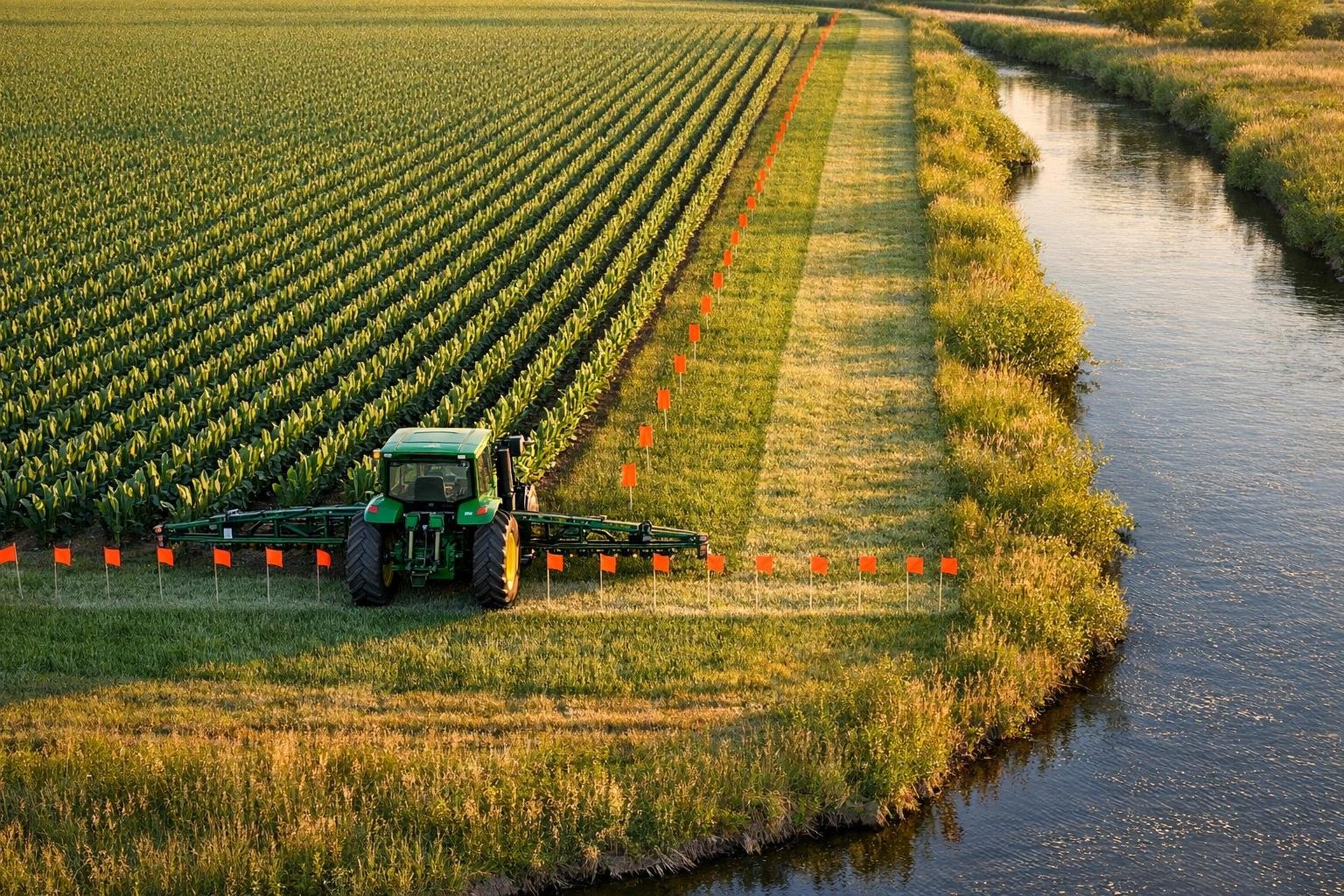
Buffer zones are mandatory safety distances between pesticide-treated areas and nearby spaces like homes, schools, or sensitive ecosystems. These zones help minimize exposure to airborne pesticide residues. The size of a buffer zone depends on factors like the pesticide application rate, the size of the treated area, weather conditions, and the application method.
Key points to remember:
- The minimum buffer zone is 25 feet, and the maximum is 2,640 feet (½ mile).
- Use the pesticide label as the primary guide for determining buffer zone distances.
- Credits, such as using high-barrier tarps or applying during cooler soil temperatures, can reduce buffer zones by up to 80%.
- Always round up calculations to ensure compliance and safety.
Accurate calculations and proper documentation are essential for meeting regulations and protecting public health. Follow the label instructions and consider tools like the EPA Buffer Zone Calculator for assistance.
Calculations and Calibrations for Small Acreage Pesticide Applications
sbb-itb-c4006de
Factors That Affect Buffer Zone Calculations
The size of a buffer zone hinges on several interconnected factors. These variables are critical for ensuring accurate distances and staying compliant with regulations.
Pesticide Label Requirements
The pesticide label is the go-to resource for determining buffer zone distances. It includes specific tables that outline required buffer distances based on application parameters and methods. According to the US EPA:
"The buffer zone distance will be determined by the broadcast equivalent application rate and the size of the application block."
Labels may also provide buffer zone credits, such as using high-barrier tarps, achieving certain soil organic matter percentages, or applying water seals. These credits can reduce required distances by up to 80%. However, even with credits, the minimum buffer zone is always 25 feet. Applications are strictly prohibited if the required buffer zone exceeds ½ mile (2,640 feet). If the exact application rate or block size isn’t listed in the label tables, round up to the nearest value to ensure compliance and safety.
Site and Weather Conditions
Weather and site-specific factors can further refine buffer zone calculations. For example, soil temperatures below 50°F may qualify for a 10% reduction in buffer distance, as can soils containing more than 27% clay content on certain labels.
For aerial applications, monitoring air temperature and relative humidity at the application site is crucial. Wind speed is another key factor in all spray applications. It should be measured at 1.5 meters above ground level and upwind of the treatment area. Real-time weather data can help adjust buffer distances using site-specific calculators when conditions are favorable.
These weather and site considerations allow for more precise and potentially reduced buffer zone calculations.
Application Methods and Mitigation Strategies
The method of pesticide application plays a significant role in determining buffer zone size. Each method – such as shank injection, broadcast spraying, chemigation, airblast, or aerial applications – has distinct look-up tables that reflect different exposure risks. Choosing the right method is critical to managing buffer zone requirements effectively.
Mitigation strategies can also help reduce buffer zone distances. For instance, high-barrier tarps trap fumigant gases, often qualifying for substantial credits. Similarly, water seals used with certain injection methods may provide comparable reductions. Always verify that your mitigation measures are listed on the product label and approved by the EPA.
If your initial calculations yield a buffer zone that’s too large for your site, consider alternative approaches. Switching to a different application method or dividing the area into smaller treatment blocks can significantly reduce required buffer distances, making it easier to work within space constraints.
How to Calculate Buffer Zones: 5 Steps
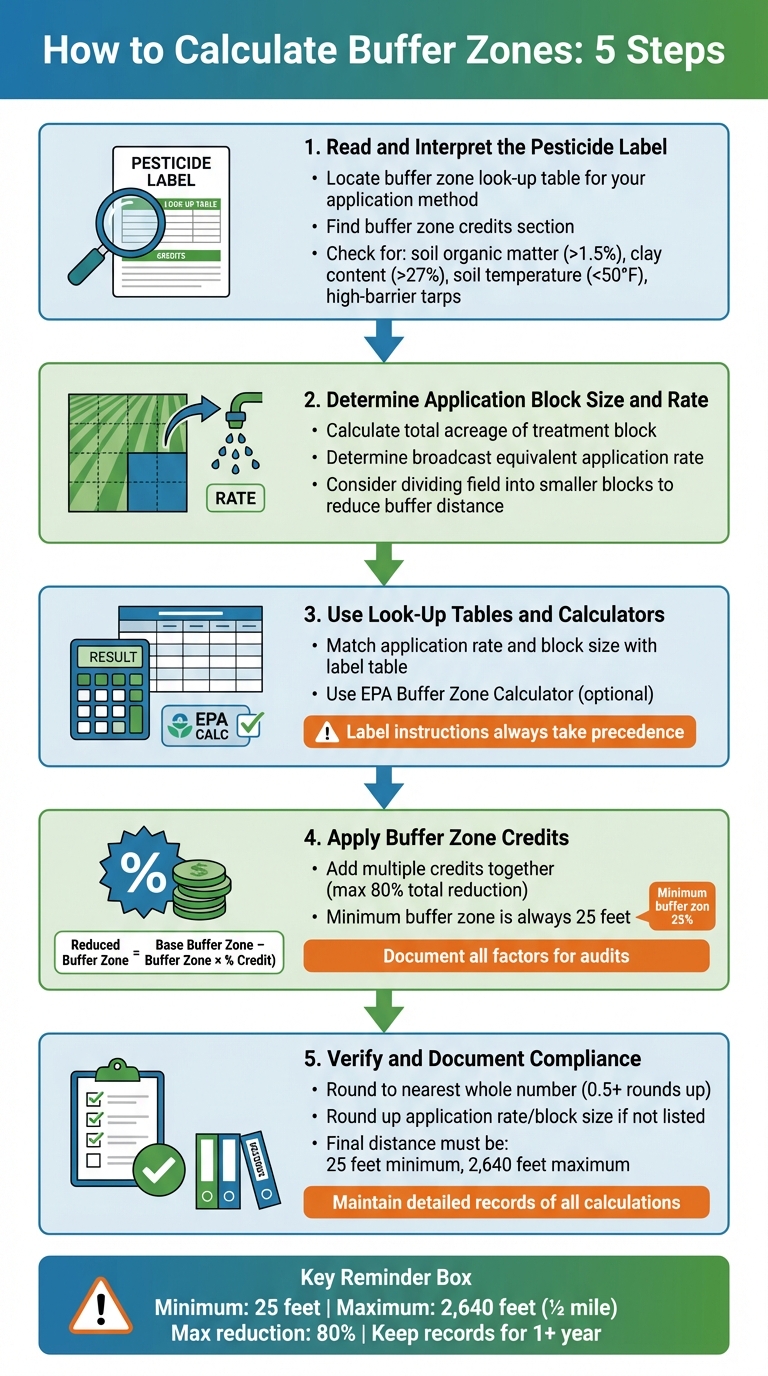
5-Step Process for Calculating Pesticide Buffer Zones
Calculating buffer zones can feel daunting, but with a clear, step-by-step approach, it becomes manageable. Here’s how to accurately work through the process while staying compliant with label requirements. Use the factors outlined earlier as a foundation and follow these steps to simplify your calculations.
Step 1: Read and Interpret the Pesticide Label
Begin by reviewing the pesticide label carefully. Locate the buffer zone look-up table specific to your planned application method – whether it’s shank injection, broadcast, or bedded applications. Each method has its own table, so ensure you’re referencing the correct one.
Next, find the section on buffer zone credits. These credits allow you to reduce the buffer zone distance based on specific conditions like soil organic matter content (>1.5%), clay content (>27%), soil temperature (<50°F), or the use of high-barrier tarps. These credits vary by product, so confirm which ones apply to your situation. For rounding guidance when your exact values aren’t listed, refer to Step 5.
Step 2: Determine Application Block Size and Rate
Calculate the total acreage of your treatment block. Then, determine the broadcast equivalent application rate, which accounts for the fumigant applied across the entire block, including any untreated areas like strips or beds.
If the buffer zone distance seems unworkable, consider dividing your field into smaller application blocks. This can help reduce the required distance. Once you’ve finalized the block size and rate, you’re ready to move on to the label tables.
Step 3: Use Look-Up Tables and Calculators
Match your application rate and block size with the appropriate table on the label to find the base buffer zone distance.
To streamline this process, you can use the EPA Buffer Zone Calculator, which automates the calculations and incorporates any applicable credits. However, the label instructions must always take precedence. As the US EPA states: "Applicators must verify that the buffer zone results from the calculator are consistent with the buffer zone requirements on product labels. If there are any discrepancies, the label must be followed".
Step 4: Apply Buffer Zone Credits
To calculate the reduced buffer zone, use this formula:
Reduced Buffer Zone = Base Buffer Zone – (Base Buffer Zone × % Credit).
If you’re applying multiple credits, such as for high organic matter and low soil temperature, add the credit percentages together before applying them to the base distance. Keep in mind that the total reduction can’t exceed 80%, and the minimum buffer zone distance is always 25 feet, no matter how many credits you apply.
Make sure to document all factors used to claim credits, like soil test results, in case of audits or inspections.
Step 5: Verify and Document Compliance
Round your final distance calculation to the nearest whole number. If the decimal is 0.5 or higher, round up to the next foot. When your application rate or block size doesn’t match any listed value, round up to the next highest value to ensure compliance and safety.
Ensure the final buffer zone distance is at least 25 feet but does not exceed 2,640 feet. The US EPA explicitly states: "The application is prohibited if the buffer zone is greater than ½ mile (2,640 feet)".
Finally, maintain detailed records of all calculations, including the application rate, block size, credits applied, and the final buffer zone distance. Proper documentation is critical for regulatory compliance and can safeguard you during inspections or audits.
Buffer Zone Calculation Examples
Here are practical examples of buffer zone calculations based on real-world scenarios. These illustrate how to apply the steps discussed earlier.
Example 1: Metam Sodium Shank Injection
Imagine a 120-acre field where metam sodium is applied via shank injection at a rate of 75 gallons per acre. According to the pesticide label’s buffer zone table, this setup requires a base buffer zone of 129 feet. Now, let’s say a soil test reveals the field has 2.5% organic matter, which qualifies it for a 20% buffer zone reduction. Using the formula:
129 – (129 × 0.20) = 103.2 feet
After rounding down decimals under 0.5, the final buffer zone is 103 feet. This reduced distance not only complies with the minimum requirement of 25 feet but also allows for a larger treatment area within the field.
Example 2: Split Application Block with Multiple Credits
Now, consider dividing the same 120-acre field into two 60-acre blocks. For each smaller block, the base buffer zone drops to 72 feet at the same application rate of 75 gallons per acre – a significant reduction compared to the 129 feet required for the entire field. Additional credits can further lower this distance. For instance, if the site qualifies for the following:
- 20% organic matter credit
- 10% soil temperature credit (for temperatures below 50°F)
- 10% clay content credit (for clay content over 27%)
These reductions total 40%. Applying the formula:
72 – (72 × 0.40) = 43.2 feet
Rounding gives a final buffer zone of 43 feet. However, it’s essential to maintain required intervals between applications if the buffer zones of the split blocks overlap. These examples highlight the importance of accurate calculations to ensure compliance while optimizing the treated area.
Conclusion
Calculating buffer zones effectively requires a blend of precise label interpretation and practical field strategies. These calculations are crucial for protecting nearby individuals and ensuring compliance with regulations. Always rely on the pesticide label as your ultimate guide – if there’s ever a conflict, the label’s instructions take precedence. Keep in mind that buffer zones must be at least 25 feet and should not exceed 2,640 feet (½ mile).
You can reduce buffer distances by up to 80% by combining eligible reduction credits, such as using high-barrier tarps, increasing soil organic matter, or applying during low soil temperatures. When using look-up tables for application rates and block sizes, always round up to stay within compliance. Additionally, be sure to retain calculator summaries for at least one year to meet audit requirements. This approach simplifies compliance and supports effective application planning.
Safe pesticide use depends on site-specific conditions, proper application methods, and detailed documentation. Tools like the EPA Buffer Zone Calculator are helpful for exploring "what-if" scenarios, but the physical product label remains the legal authority. Accurate calculations and thorough record-keeping are essential for ensuring both safety and regulatory adherence.
Expand your knowledge base to stay ahead of evolving requirements.
Continue Your Training with Online Pest Control Courses
Keeping up with changing EPA standards and state-specific regulations demands ongoing learning. Online Pest Control Courses (https://onlinepestcontrolcourses.com) offers state-approved training designed to help you navigate complex label interpretations, apply reduction credits, and use digital calculators effectively. Their courses provide CEUs and CCUs, accessible across all devices, with instant certificate downloads upon completion. Topics include pesticide regulations, formulations, environmental considerations, and pest control strategies – giving you the tools to confidently manage buffer zone calculations and maintain compliance throughout your career.
FAQs
How do I measure a buffer zone in an irregular-shaped field?
When determining a buffer zone for an irregularly shaped field, refer to the look-up tables provided on pesticide labels or use specialized calculators. Since buffer zones extend outward from the field’s perimeter, start by measuring the entire perimeter and then apply the required buffer distance consistently around it. For more accuracy, tools like the EPA Soil Fumigant Buffer Zone Calculator can factor in specific application details and site conditions, ensuring precise measurements.
What records should I keep to prove I used buffer zone credits correctly?
To correctly manage buffer zone credits, maintain detailed records of the buffer zone size, application rate, site conditions, and any credits or reduction methods you’ve used. Be sure to document key details like buffer zone calculation results, weather conditions during application, sprayer configuration, and the methods used for applying pesticides. Keep these records on file for at least one year to stay in line with EPA guidelines and pesticide label requirements.
What should I do if my required buffer zone overlaps homes, schools, or roads?
If your buffer zone includes homes, schools, or roads, make sure to exclude these areas unless the product label specifically permits it. Regulations often prohibit such overlaps. If the buffer zone extends onto another person’s property, secure written permission to restrict access during the buffer period. To shrink the buffer zone, you could lower the application rate, switch to a different active ingredient, or break the treated area into smaller sections.