
Online vs. In-Person Exam Prep: Pros and Cons
Compare online and in-person pesticide exam prep—flexibility, cost, hands-on practice, tech requirements, and which format suits different learners.
Compare online and in-person pesticide exam prep—flexibility, cost, hands-on practice, tech requirements, and which format suits different learners.
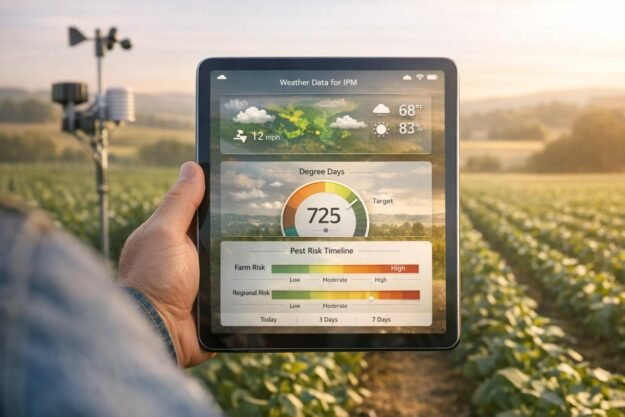
Real-time weather, GDD, and predictive models sharpen IPM timing, reduce pesticide use, and improve yields with on‑farm and regional forecasts.
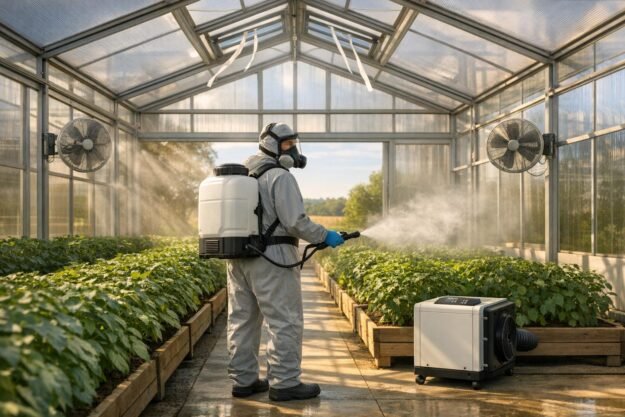
Ventilation, filtration, and safe application can cut airborne pesticide exposure—key risks, causes, and practical tips for indoor and field safety.
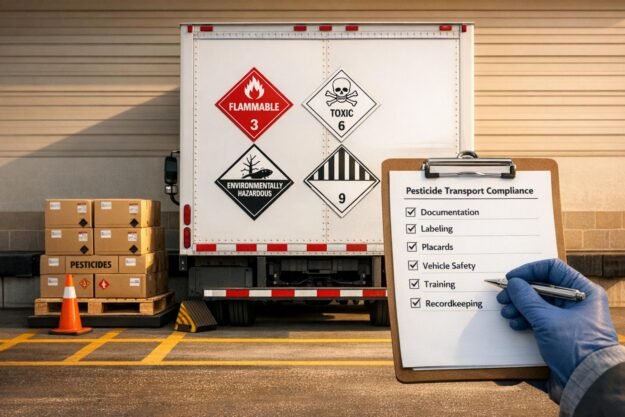
Step-by-step DOT checklist for safely transporting pesticides: documentation, labeling, placards, vehicle safety, training, and recordkeeping.
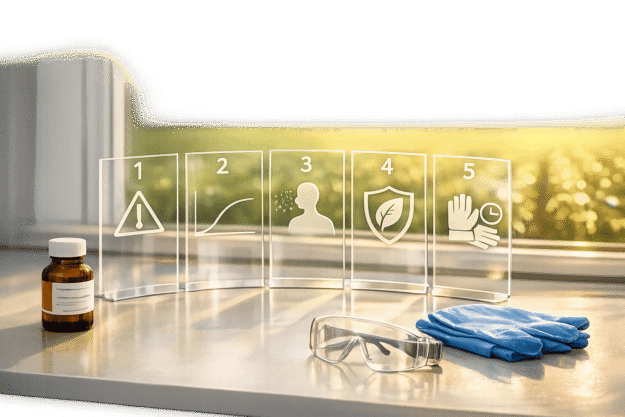
Five practical steps to assess pesticide toxicity: identify hazards, evaluate dose-response, estimate exposure, characterize risk, and choose PPE and REIs.
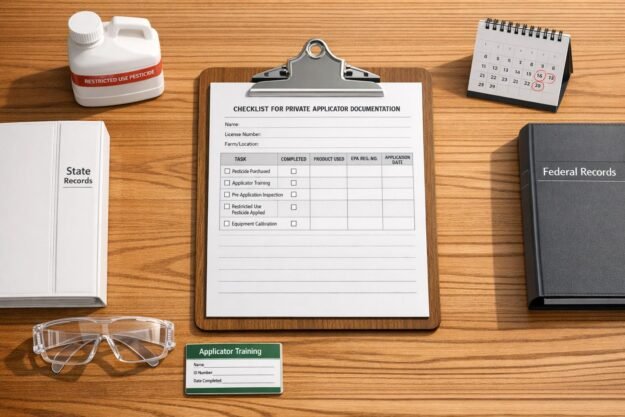
Complete checklist for documenting restricted-use pesticide applications: required fields, state vs federal deadlines, retention rules, training and safety records.
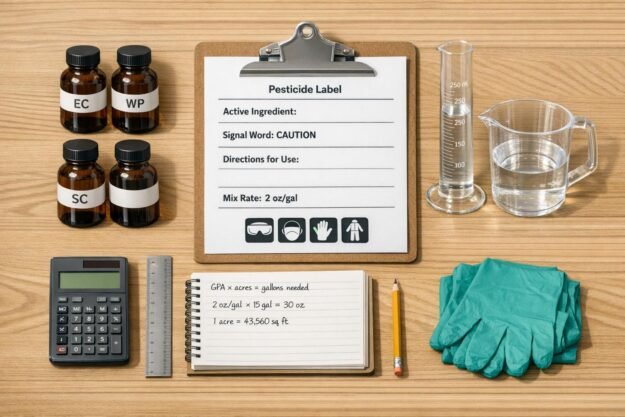
Master formulation types, label interpretation, mixing procedures, and application math to confidently pass the pesticide formulations exam.

Compare five top digital tools for pesticide applicators that simplify compliance, mobile logging, GPS mapping, and inventory tracking.
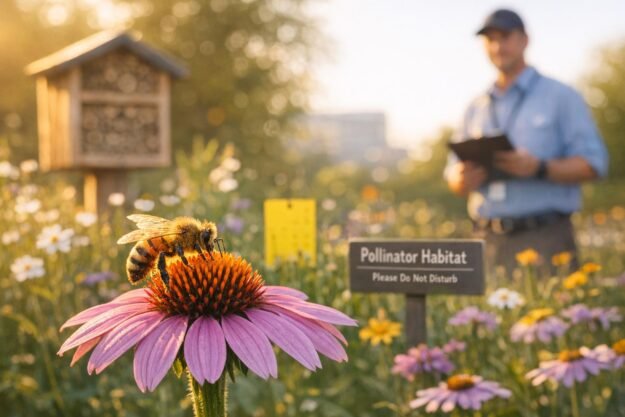
IPM strategies that protect pollinators and public health through monitoring, habitat changes, non-chemical tactics, and targeted, minimal pesticide use.
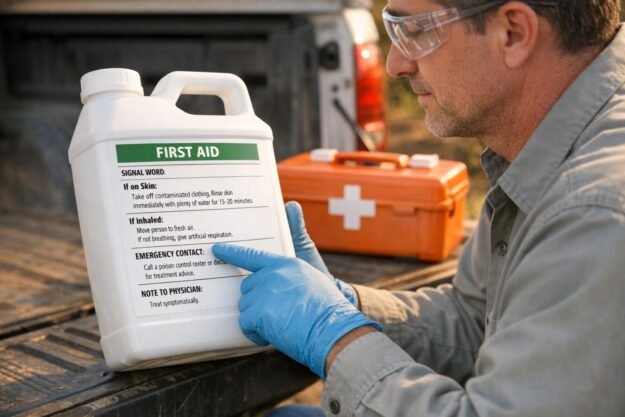
How to read pesticide first aid label sections: signal words, exposure-specific steps, emergency contacts, and physician notes for applicators.