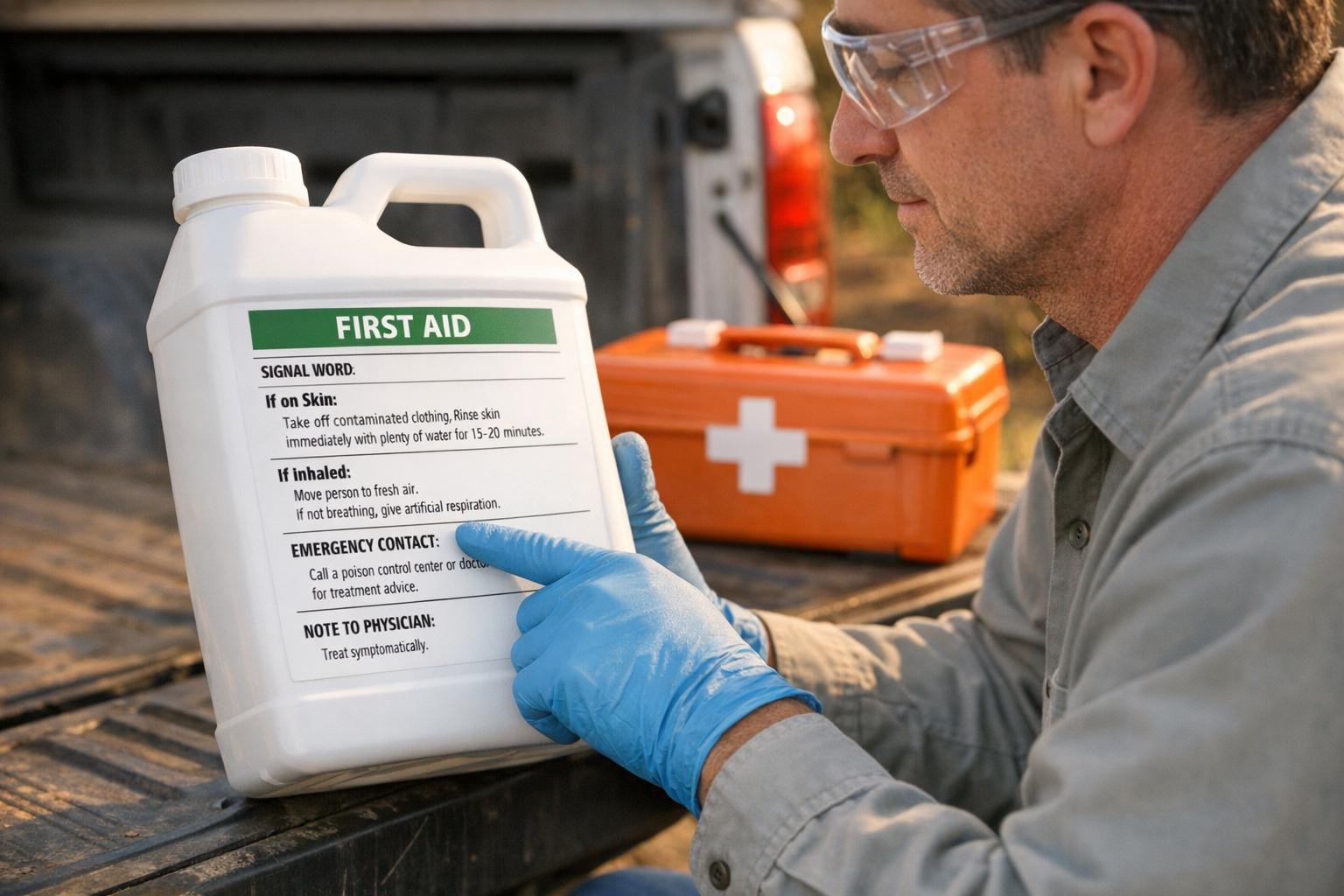
Pesticide labels are legal documents that provide critical first aid instructions for emergencies like ingestion, skin contact, inhalation, or eye exposure. These labels include toxicity levels, first aid steps, and emergency contact details to ensure safety and compliance with federal regulations. Key points:
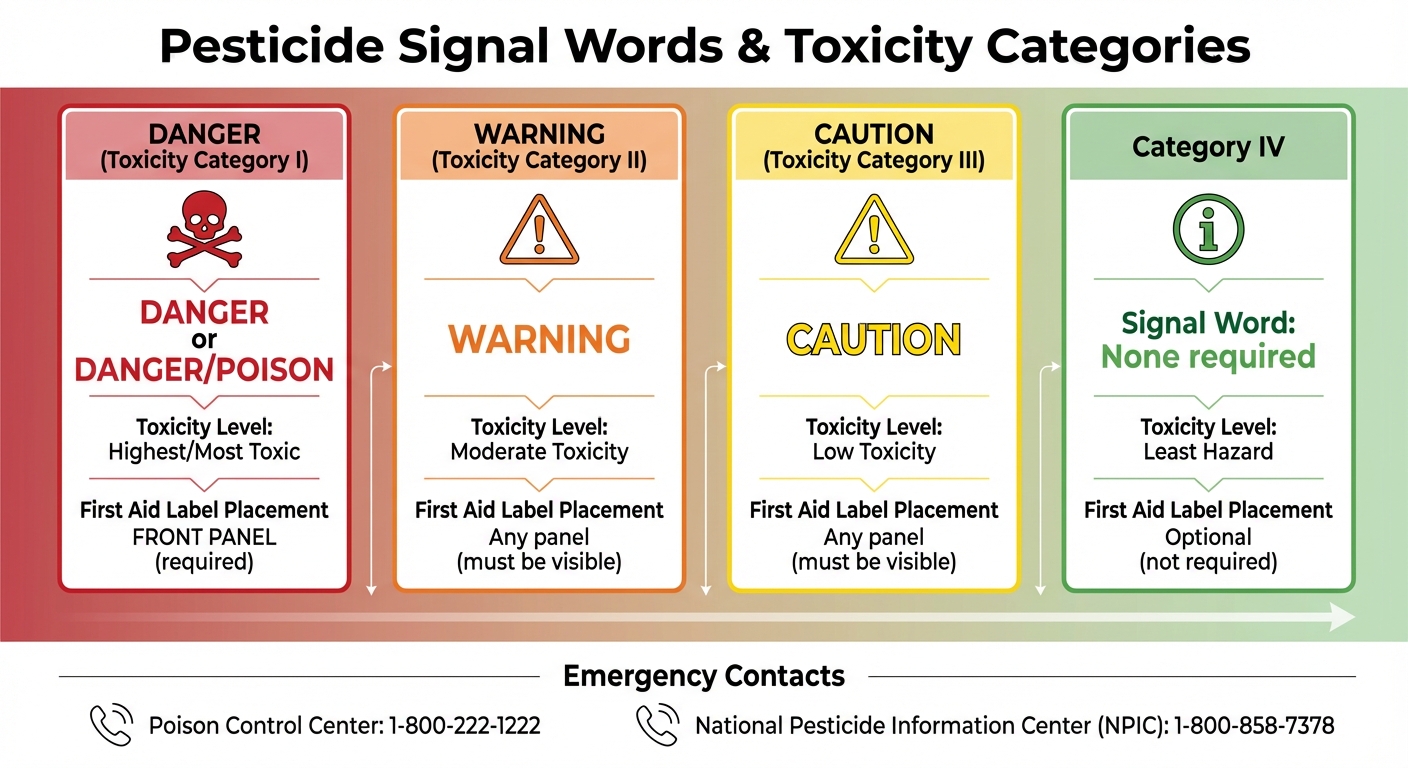
- Signal Words: Indicate toxicity levels – DANGER (high), WARNING (moderate), CAUTION (low).
- First Aid Steps: Specific actions for ingestion, skin contact, inhalation, or eye exposure.
- Label Placement: Highly toxic products (Category I) must display first aid info on the front panel.
- Emergency Contacts: Poison Control (1-800-222-1222) and NPIC (1-800-858-7378) are key resources.
- Preparation: Always read first aid sections before use, store emergency numbers, and have a first aid kit ready.
Understanding and following label instructions is legally required and can save lives during pesticide application hazards and first aid incidents.
Pesticide Label Signal Words and Toxicity Categories Guide
Pesticide Hazards and First Aid
sbb-itb-c4006de
Main Parts of First Aid Label Sections
Every pesticide label includes a dedicated first aid section, clearly marked with the heading "First Aid" or "Statement of Practical Treatment". Knowing how to interpret these sections is crucial for applicators to act appropriately in emergencies and relay key information to healthcare providers.
Signal Words and Their Meaning
Signal words on pesticide labels indicate the product’s toxicity level. Here’s what they mean:
- DANGER (or DANGER/POISON with a skull and crossbones) is used for the most toxic products, classified as Toxicity Category I. These products must display the first aid instructions prominently on the front panel.
- WARNING represents moderate toxicity (Category II), while CAUTION is used for lower toxicity (Category III). For these categories, first aid information can appear on any panel.
- Category IV products, which pose the least hazard, are not required to include a first aid statement, though it’s optional.
These signal words help users quickly assess the product’s danger level and prepare for the specific first aid steps outlined in the next section.
First Aid Steps for Different Exposure Routes
First aid instructions are tailored to the specific route of exposure – whether ingestion, skin contact, inhalation, or eye exposure. They are written in simple, easy-to-follow language to ensure quick understanding during emergencies:
- Ingestion: If swallowed, the label often advises calling poison control or a doctor immediately. If the person can swallow, they may be instructed to sip water. Special procedures apply for products with more than 10% petroleum distillates due to the risk of aspiration.
- Skin Contact: Remove any contaminated clothing and rinse the affected area with plenty of water for 15–20 minutes.
- Inhalation: Move the individual to fresh air immediately, call 911, and provide artificial respiration if necessary.
- Eye Contact: Hold the eye open and rinse gently with water for 15–20 minutes. Contact lenses should be removed after the first five minutes.
First aid statements are designed to be concise and written in plain language, ensuring that anyone can quickly understand and follow the instructions during an emergency.
In addition to these immediate steps, labels often include technical details for medical professionals.
Note to Physicians and Antidote Information
The "Note to Physicians" section provides critical details for healthcare providers, including antidotes, symptoms, and specialized treatment procedures. This section may also include an emergency 800-number for products labeled with DANGER. Additionally, it often lists inert ingredients like petroleum distillates, which can affect treatment protocols.
Any procedures requiring specialized equipment or expertise must be included in the Note to Physicians section and nowhere else.
When seeking medical help, always bring the pesticide container or label. It contains essential information, such as the EPA registration number and physician notes, that can guide proper treatment.
Finding and Reading First Aid Information on Labels
Being able to quickly locate first aid information on pesticide labels can make a critical difference in emergencies. Federal regulations require that first aid statements are immediately visible on the product’s label, so you won’t need to search through booklets or extra pages to find them. Here’s how labels are structured to help you locate this information efficiently.
How Labels Are Organized
First aid information is placed based on the product’s toxicity category. For Toxicity Category I – the most hazardous products – first aid instructions are prominently displayed on the front panel . This ensures that emergency details are instantly accessible.
For products in Categories II and III, the information can appear on any panel, as long as it remains immediately visible . If a Category I product receives EPA approval to move its first aid instructions off the front panel, the label must include a referral statement such as "See first aid statement on back panel" to guide users.
"The heading of the statement may be ‘First Aid’ or ‘Statement of Practical Treatment.’" – 40 CFR 156.68
On the front panel, first aid instructions are typically located right after the signal word, making them easier to spot in urgent situations. Once located, these instructions will often include emergency contact numbers for further assistance.
Using Emergency Contact Numbers
Quick access to emergency contact numbers is another crucial element during a pesticide-related incident. These numbers are usually listed within the "First Aid" section or under a "Hot Line Number" heading for clarity. Key numbers include the national Poison Control Center hotline at 1-800-222-1222 and the National Pesticide Information Center (NPIC) at 1-800-858-7378 for non-emergency inquiries about the product.
When seeking medical help, keep the container or label with you. The label provides essential information for healthcare providers, such as the EPA registration number, active ingredients, and any specific physician instructions. This ensures accurate and effective treatment during emergencies.
How to Use First Aid Label Sections
Getting Ready for Emergencies
Preparation is key when dealing with emergencies involving pesticides. Take time to carefully read the first aid sections on product labels at three critical points: before purchasing, before mixing, and before applying. This proactive approach helps you understand the specific risks associated with each product and the best ways to handle exposure.
Store emergency contact numbers in your phone so they’re easily accessible. Also, put together a pesticide first aid kit. Include essentials like detergent (which works better than soap), a plastic airway for resuscitation, at least one pint of water, adhesive bandages, and a small jar for collecting vomit samples if medical analysis becomes necessary.
If you’re regularly exposed to pesticides, it’s a smart idea to inform your doctor about the products you use. This allows them to stock the appropriate antidotes and quickly recognize symptoms of exposure, should the need arise.
When an exposure incident occurs, having this preparation in place can make all the difference.
What to Do During an Exposure Incident
Knowing how to act during an exposure incident is just as important as being prepared. If someone is unconscious, convulsing, or having trouble breathing, call 911 immediately before attempting first aid. For conscious individuals, follow the first aid instructions specific to the product, which are detailed on the label. Locate the "First Aid" section for these critical guidelines.
Your response will vary depending on the type of exposure:
- Skin Contact: Rinse the affected area thoroughly with water – any source like a pond or hose will do – then remove contaminated clothing. Afterward, wash the skin and hair with detergent and water as quickly as possible.
- Eye Exposure: Gently hold the eyelids open and flush the eyes with a steady stream of water for at least 15 minutes. Since pesticide absorption through eye tissues happens rapidly, immediate action is crucial to prevent permanent damage.
- Inhalation: If pesticides have been inhaled in an enclosed area, do not attempt a rescue unless you have an air-supplied respirator.
- Ingestion: For conscious individuals, provide small sips of water (less than 4 ounces) to dilute the poison. Never give anything by mouth to someone who is unconscious.
"Induce vomiting ONLY if emergency personnel on the phone or the product label tells you to do so." – US EPA
When medical help is needed, be ready to provide the active ingredients and the EPA Registration Number from the product label to emergency responders.
First Aid Training and Certification
Keeping your first aid knowledge up to date isn’t just a good idea – it’s a critical responsibility for anyone working with pesticides. Certification requires a solid understanding of emergency response procedures and the ability to interpret product labels accurately. Platforms like Online Pest Control Courses offer state-approved training that covers pesticide safety, emergency protocols, and label comprehension. Plus, you can download your certificate immediately upon completion.
Regular training ensures you’re always prepared to handle emergencies confidently. By maintaining your skills and having the necessary tools on hand, you’ll be ready to follow the label-based procedures outlined earlier, all while staying compliant with federal and state regulations.
Conclusion: What Applicators Need to Remember
Key Takeaways
Understanding first aid labels isn’t just a good practice – it’s a legal necessity and can be life-saving in emergencies. Labels use signal words like DANGER, WARNING, and CAUTION to indicate toxicity levels. First aid instructions must be clearly visible on the packaging without needing to open it. For products classified under Toxicity Category I (the most hazardous), these instructions are prominently displayed on the front panel. Each potential exposure route – whether ingestion, inhalation, skin contact, or eye exposure – has specific instructions that must be followed to the letter. Additionally, the "Note to Physicians" section includes critical antidote information, so always bring the product label or container when seeking medical help.
"To the buyer or user, the label is the main source of information on how to use the product correctly, legally and safely." – MU Extension
It’s important to remember that following label instructions isn’t optional – it’s required by federal law.
Next Steps for Applicators
To ensure compliance and safety, make it a habit to review the first aid section of the label at every stage: when purchasing, mixing, applying, and storing/disposing of the product. Save emergency contact numbers, such as Poison Control (1-800-222-1222) and NPIC (1-800-858-7378), for quick access in case of an incident.
Finally, staying updated through professional training is crucial. Platforms like Online Pest Control Courses offer state-approved training on pesticide hazards and first aid, complete with instant certificates upon completion. Being well-prepared means you’re ready to handle emergencies effectively when they arise.
FAQs
What should I tell 911 or Poison Control from the label?
If someone is unconscious, struggling to breathe, or having convulsions, call 911 right away. For first aid advice, reach out to Poison Control at 1-800-222-1222. Check the pesticide label for detailed instructions and provide responders with all necessary information.
When should I NOT try to rescue someone from fumes?
If someone is unconscious, having trouble breathing, or experiencing convulsions due to fumes, do not attempt to rescue them yourself. Instead, call 911 right away and wait for trained professionals to handle the situation. Your safety is just as important.
Do I need first aid training to apply pesticides legally?
First aid training isn’t a legal requirement for pesticide application. However, every pesticide label must display clear and prominent first aid instructions to handle accidental exposure. It’s crucial to carefully read and understand these instructions before using any pesticide.