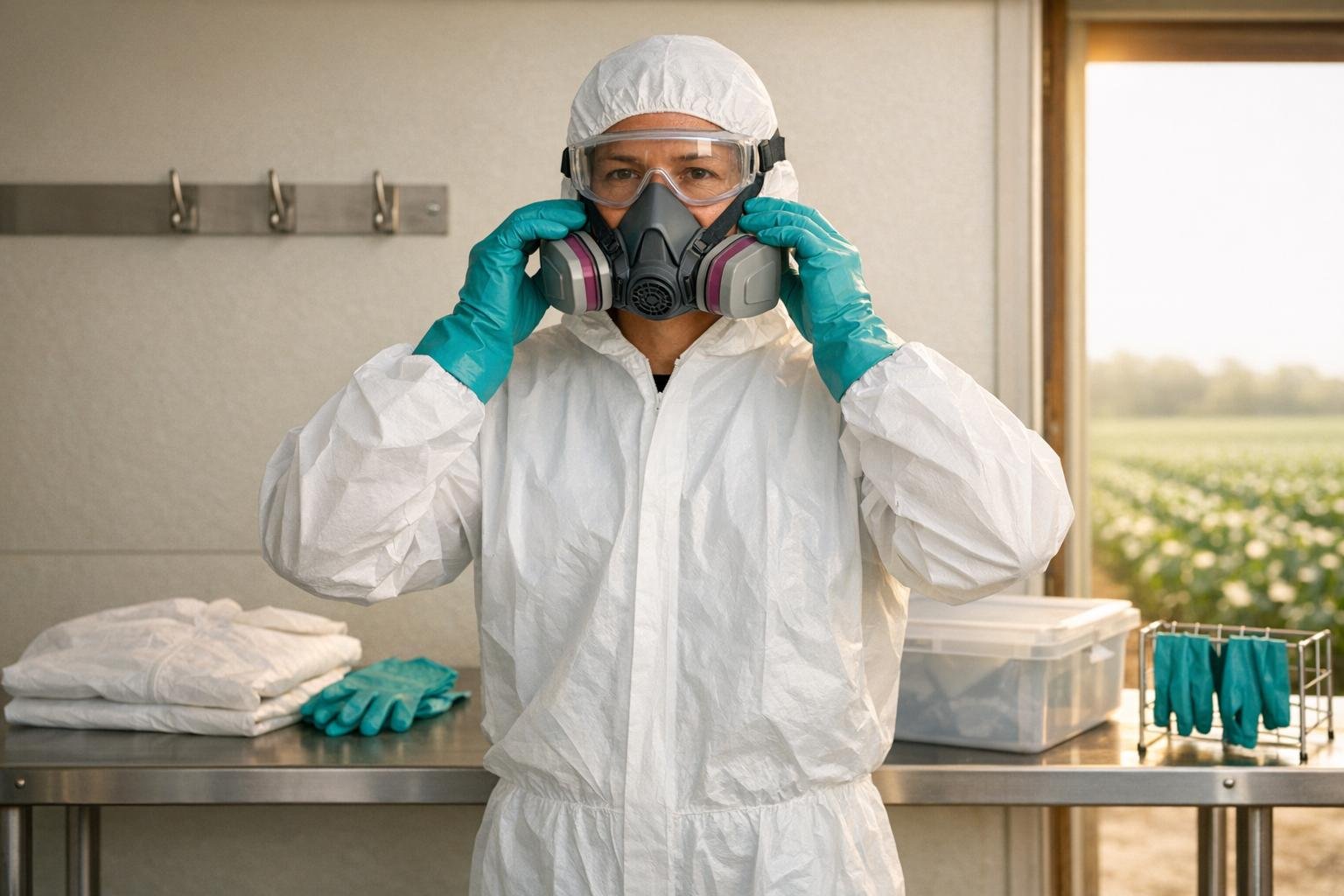
Pesticide labels are legal documents, and wearing the proper personal protective equipment (PPE) is mandatory to protect yourself from harmful exposure. Skin contact accounts for 97% of pesticide exposure during spraying, making protective clothing like gloves, coveralls, and respirators non-negotiable. Here’s what you need to know:
- Pesticide Labels = Legal Requirements: Always follow the PPE instructions on pesticide labels. Non-compliance is a federal offense under FIFRA.
- Basic Clothing: Long-sleeved shirts, long pants, socks, and closed-toe shoes are the minimum. For higher risks, chemical-resistant suits or aprons may be necessary.
- Gloves and Materials: Use chemical-resistant gloves (e.g., nitrile, butyl rubber) with a thickness of at least 14 mils. Avoid absorbent materials like cotton or leather.
- Fit and Usage: Loose-fitting clothing reduces pesticide penetration. Always inspect PPE for tears or damage before use.
- Cleaning and Maintenance: Wash contaminated clothing separately and replace heavily saturated items. Proper storage prevents contamination.
Wearing the right PPE isn’t just about safety – it’s the law. Always read the label and use the most protective equipment for the task at hand.
How to Read Pesticide Label PPE Requirements
What the Label Requires
Pesticide labels include clear instructions on the personal protective equipment (PPE) required for safe handling. For applicators, mixers, and loaders, these details are found in the "Precautionary Statements" section. Agricultural pesticide labels also feature an "Agricultural Use Requirements" box, which outlines specific protections for early-entry workers under the Worker Protection Standard.
The label specifies exactly what to wear, such as gloves, coveralls, respirators, or eye protection. For instance, if a label mentions "chemical-resistant gloves", it means the material must prevent any measurable pesticide penetration during use. Some labels even provide EPA chemical resistance categories (A–H) to help you choose the right material – like nitrile, butyl rubber, or Viton – and may specify minimum material thickness (e.g., nitrile gloves at 14 mils).
When mixing pesticides or if no PPE is explicitly listed, it’s safest to follow the most protective guidelines. This typically includes wearing a long-sleeved shirt, long pants, chemical-resistant gloves, socks, and closed-toe shoes. As noted by UNH Extension:
Wearing more PPE than the label requires is allowed and often advisable, especially in high-risk situations. However, wearing less PPE than specified is both unsafe and a violation of federal law.
Carefully following these instructions is essential – not just for your safety, but also to avoid legal trouble.
Legal and Safety Consequences of Non-Compliance
A pesticide label isn’t just a guideline – it’s a legal document under FIFRA (Federal Insecticide, Fungicide, and Rodenticide Act). Ignoring label requirements can lead to federal penalties and serious health risks.
Without the proper PPE, you’re exposed to potential poisoning and long-term health issues from pesticide exposure. Additionally, contaminated clothing can put others at risk. Employers have a responsibility to provide clean, functional PPE, ensure it’s used properly, and keep records of respirator fit tests and training for at least two years.
sbb-itb-c4006de
Proper Selection, Use, and Removal of PPE. Module 4: Selecting and Wearing PPE
Basic Clothing Standards: Long-Sleeved Shirts and Long Pants
When it comes to pesticide Personal Protective Equipment (PPE), proper clothing is the first line of defense. Long-sleeved shirts and long pants are essential, even if the pesticide label doesn’t specifically call for additional protective gear. These garments act as a barrier, helping to reduce skin exposure, which accounts for a staggering 97% of pesticide contact.
This baseline protection is crucial for shielding against splashes and spray drift, reducing both immediate irritation and potential long-term health risks. Certain areas of the body – like the scalp, ears, and genital region – are more prone to absorbing chemicals, so it’s especially important to ensure they’re fully covered. Up next, let’s dive into the best materials and how to ensure a proper fit.
Best Materials for Pesticide Protection
For routine tasks involving low-toxicity pesticides (those labeled with the "CAUTION" signal word), tightly woven cotton or cotton/polyester blends are reliable choices. These fabrics are breathable and comfortable while offering adequate protection for everyday applications.
In higher-risk scenarios, non-woven materials like Tyvek are a better option. These materials provide enhanced resistance to liquid and particulate penetration, making them a safer choice for handling more hazardous pesticides. Plus, their disposable nature eliminates concerns about residual pesticide contamination after use.
On the other hand, avoid materials such as leather, canvas, or untreated cotton. These fabrics tend to absorb pesticides, making them difficult – if not impossible – to fully decontaminate. For garments made of cotton, replacing them at least once a year is recommended to prevent the buildup of pesticide residues. Choosing the right material is only part of the equation; proper fit is just as critical.
How Clothing Should Fit
Clothing fit plays a big role in how effectively it protects you. Loose-fitting garments create an air gap, which can help reduce pesticide penetration, especially when the fabric becomes damp.
It’s also important to wear pants over your boots, not tucked inside. This prevents pesticides from seeping into your footwear. Similarly, tuck shirt sleeves into gloves to stop liquids or sprays from creeping into the cuffs.
Finally, always inspect your clothing for any holes or tears before putting it on. Even small defects can compromise your protection.
Chemical-Resistant Gloves: Materials and Selection
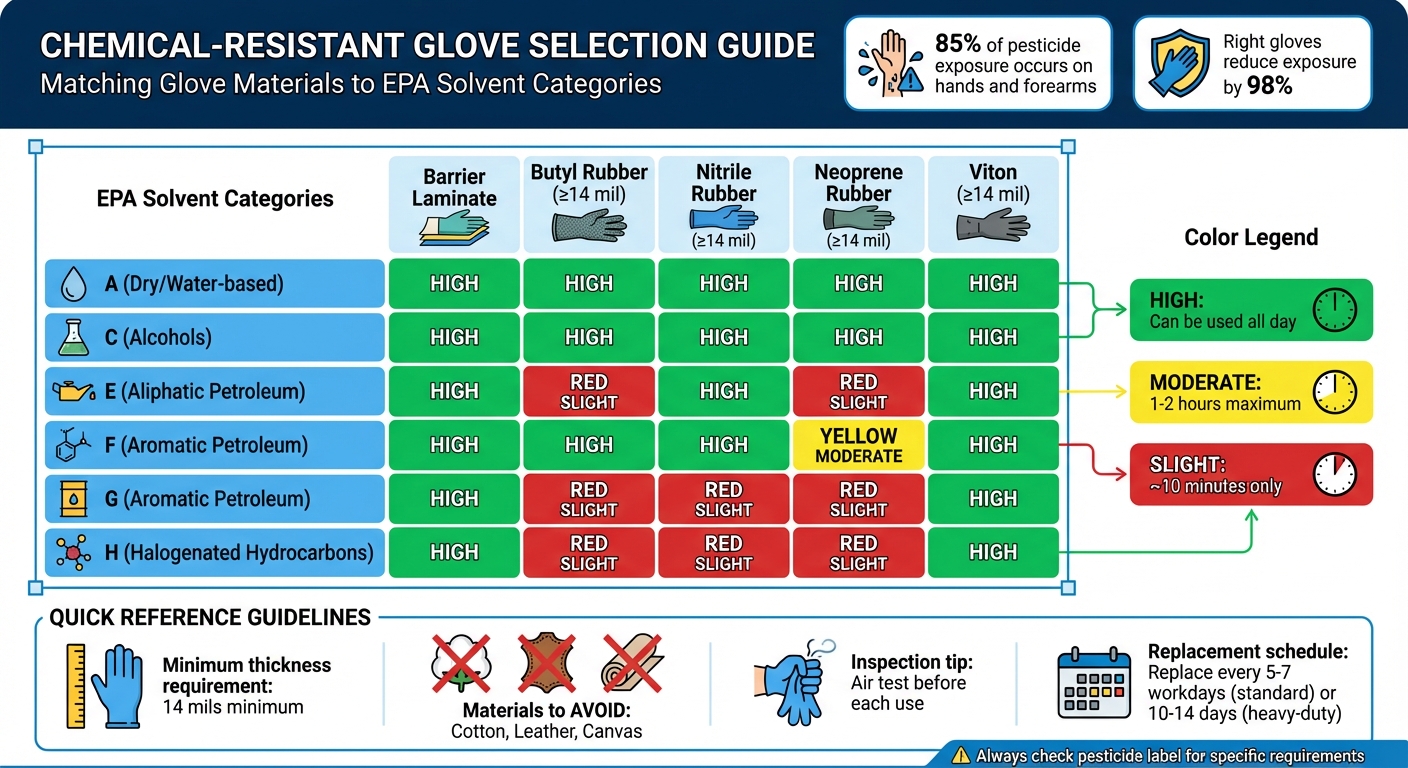
Chemical-Resistant Glove Selection Guide for Pesticide Application
When working with pesticides, protecting your hands and forearms is crucial. These areas are particularly vulnerable, with studies showing that workers mixing pesticides experience 85% of exposure on their hands and 13% on their forearms. The right gloves can cut pesticide exposure by at least 98%.
Matching Glove Material to the Task
Gloves vary in their ability to block chemicals, so always check the pesticide label for guidance. Labels might specify a solvent category (like A, C, E, F, G, or H) or list recommended glove materials. Barrier laminate provides the most comprehensive protection across all EPA solvent categories, though it can lack the flexibility needed for detailed tasks. For many jobs, nitrile and butyl rubber gloves strike a good balance between safety, cost, and dexterity.
Thickness matters, too. Chemical-resistant gloves typically range from 12 to 22 mils thick (1 mil = 0.001 inch). Many labels require at least 14 mils for materials like nitrile, neoprene, or butyl rubber. Avoid gloves made from cotton, leather, or canvas, as they absorb pesticides and hold them against the skin. Similarly, steer clear of gloves with cloth or "flocked" linings, as these cannot be fully cleaned and increase the risk of long-term exposure.
Choosing the Right Glove for Your Chemicals
The solvent category on the pesticide label is your guide to selecting glove materials. For Category A (dry or water-based formulations), most chemical-resistant materials like nitrile, neoprene, butyl rubber, barrier laminate, and Viton offer excellent protection. However, for more aggressive chemicals, such as those in Category G (aromatic petroleum) or H (halogenated hydrocarbons), only barrier laminate and Viton are reliable.
Here’s a quick material reference:
| Solvent Category | Barrier Laminate | Butyl Rubber (≥14 mil) | Nitrile Rubber (≥14 mil) | Neoprene Rubber (≥14 mil) | Viton (≥14 mil) |
|---|---|---|---|---|---|
| A (Dry/Water-based) | High | High | High | High | High |
| C (Alcohols) | High | High | High | High | High |
| E (Aliphatic Petroleum) | High | Slight | High | High | High |
| F (Aromatic Petroleum) | High | High | High | Moderate | High |
| G (Aromatic Petroleum) | High | Slight | Slight | Slight | High |
| H (Halogenated Hydrocarbons) | High | Slight | Slight | Slight | High |
"High" resistance means the material can be used all day; "Moderate" means 1–2 hours; "Slight" means about 10 minutes.
It’s also important to understand the difference between waterproof and chemical-resistant gloves. Waterproof gloves block water-based substances but might break down when exposed to oil-based pesticide solvents. Chemical-resistant gloves, on the other hand, are specifically designed to resist chemical penetration and degradation.
Proper Glove Usage
Once you’ve chosen the right gloves, using them correctly is just as important. Before wearing, perform an air test by squeezing the glove – if air escapes, it’s time for a new pair.
How you wear gloves depends on your task:
- Spraying downward: Wear sleeves over the gloves to stop liquid from seeping in.
- Working overhead: Tuck sleeves inside the gloves to keep liquids out.
For added comfort and safety, consider wearing a thin disposable glove underneath your chemical-resistant gloves. This reduces chafing and provides a backup layer during removal.
Reusable gloves require proper cleaning and care. Wash the outer surface with soap and water before removing them to avoid contamination. Even if they appear fine, replace gloves used frequently every 5–7 workdays. Heavy-duty options like butyl or nitrile gloves can last 10–14 days. Store cleaned gloves in a sealed container or bag, away from sunlight and pesticides, to keep the material intact and uncontaminated.
Coveralls, Suits, and Aprons for High-Exposure Tasks
When working with pesticides or other hazardous materials, basic clothing often isn’t enough. For tasks with higher exposure risks, advanced personal protective equipment (PPE) like coveralls, chemical-resistant suits, and aprons is essential to minimize danger.
When Coveralls and Full-Body Suits Are Required
Pesticide labels provide clear directions on when to wear more protective gear. If the label specifies coveralls or chemical-resistant suits, they must be used. Tasks such as mixing concentrated pesticides, loading equipment, aerial spraying, or working in enclosed spaces often demand extra protection – even if the label doesn’t explicitly mention it.
Coveralls are loose-fitting garments, typically made from cotton or polyester, offering breathability but no chemical resistance. On the other hand, chemical-resistant suits are constructed from materials like PVC, butyl rubber, or Tychem SL, which provide a strong barrier against pesticides. For tasks involving liquid exposure, suits with sealed seams offer the best protection. However, it’s important to balance protection, breathability, and cost based on the specific job.
Here’s a quick comparison of common materials used in protective suits:
| Material | Liquid Proof | Chemical Protection | Breathable | Relative Cost |
|---|---|---|---|---|
| Tyvek (Standard) | No | No (Particulates only) | Yes | Low |
| Tyvek QC (Sealed Seams) | Yes | Yes | No | Moderate |
| Tychem SL (Sealed Seams) | Yes | Yes | No | High |
| PVC Suits | Yes | Yes | No | Moderate to High |
Chemical-resistant suits can sometimes replace coveralls and other inner layers. However, these suits are not breathable, so it’s crucial to watch for signs of heat illness, especially during warmer weather.
Chemical-Resistant Aprons for Mixing and Loading
For tasks like mixing, loading, or cleaning equipment – where concentrated spills are more likely – chemical-resistant aprons provide targeted protection. These aprons are especially useful when full-body suits are too cumbersome. An effective apron should cover from mid-chest to the knees for adequate protection.
Materials such as PVC, nitrile, or neoprene, with sealed, dual-sided coatings, are ideal for preventing pesticide penetration.
However, aprons should never be worn near moving equipment, as they can snag and lead to serious injuries. In such cases, a full chemical-resistant suit is a safer alternative.
"Wearing personal protective equipment (PPE) is your first line of defense against pesticide exposure."
– Elizabeth Danielson, Pesticide Safety Education Extension Specialist, Iowa State University
When handling multiple pesticide products, always adhere to the most restrictive PPE requirements listed on the labels. Additionally, any absorbent PPE – like cotton coveralls – soaked with undiluted pesticides labeled "DANGER" or "WARNING" should be discarded immediately and never reused.
Footwear, Headgear, and Proper Fit
Protective Footwear Requirements
When it comes to pesticide safety, footwear plays a crucial role in protecting your feet and lower legs. Always opt for non-absorbent, chemical-resistant footwear as specified on pesticide labels. These requirements might range from "shoes plus socks" to "chemical-resistant footwear plus socks". Materials like natural rubber, nitrile, neoprene, or polyvinyl chloride (PVC) are your best bet, as they resist chemical absorption. On the other hand, steer clear of leather, canvas, or fabric shoes – they absorb chemicals and can’t be fully decontaminated.
Some practical options include:
- Chemical-resistant boots (usually 6 to 16 inches tall)
- Chemical-resistant shoes
- Disposable shoe covers worn over regular footwear
For maximum safety, use unlined boots and tuck pant legs over the footwear to prevent chemicals from seeping in. After each use, thoroughly clean your boots to remove any pesticide residue.
Head and Face Protection Options
For tasks that demand head protection, use chemical-resistant headgear like wide-brimmed hats or hoods made from materials such as PVC or chloroprene. Avoid using baseball caps, felt hats, straw hats, or any cloth-based headwear, as these materials absorb pesticides and increase skin exposure. If you’re working in high-exposure conditions, consider hoods that attach to chemical-resistant suits for full coverage of your head, neck, and shoulders.
Getting the Right Fit for All PPE
Proper fit is just as important as selecting the right materials when it comes to personal protective equipment (PPE). Ill-fitting gear – whether too tight or too loose – can compromise safety and limit mobility. Here are some tips to ensure a proper fit:
- Respirators: Always undergo professional fit testing before first use and then annually. Perform a user seal check every time you wear the respirator to ensure it’s working correctly.
- Chemical-resistant boots: These come in both numerical shoe sizes and general sizes (S/M/L). Pick the right height based on your task – 6-inch boots for low splash risk or 16-inch boots for higher exposure situations.
- Headgear: Choose designs with chin straps to keep them securely in place, even during active movements.
How to Clean and Maintain Pesticide Clothing
Washing and Decontaminating PPE
Keeping your personal protective equipment (PPE) clean is critical for your safety and ensures it remains effective over time. Always use chemical-resistant gloves when handling contaminated clothing to avoid direct skin exposure to harmful substances. If your clothing has been soaked with liquid concentrates or subjected to major spills, it’s best to dispose of it – washing won’t remove all the residue.
For dry residues, shake or brush them off outdoors, paying close attention to areas like cuffs and pockets where residues tend to collect. Ideally, contaminated clothing should be washed within 24 hours to remove as much residue as possible. If immediate washing isn’t an option, store the items in a sealed plastic bin labeled "Pesticide Residue" and keep it outside your home.
"Research confirms that traces of pesticide remain on heavily contaminated clothing even after washing." – Elizabeth Danielson, Pesticide Safety Education Extension Specialist, Iowa State University
Never mix pesticide-contaminated clothing with your regular laundry. Wash these items using the hottest heavy-duty cycle, add the maximum amount of detergent, and ensure the load fills only 50–75% of the washer’s capacity. Include a pre-rinse or soak and select a cycle that runs for at least 20 minutes. Whenever possible, line dry the clothing outdoors, as this method leaves less residue than machine drying. Afterward, run an empty hot water cycle with detergent to clean the washing machine.
Proper cleaning is just the start – how you store your PPE also matters.
How to Store PPE Properly
After cleaning, store PPE in a way that prevents cross-contamination. Keep clean PPE in a separate, dry area, away from household items and pesticide containers. This prevents exposure to chemical vapors or accidental contamination. Materials like nitrile or PVC used in protective suits should be dried thoroughly before storage and kept out of direct sunlight to avoid material degradation. For respirators, always follow the manufacturer’s storage guidelines to protect the filters and facepieces.
When to Inspect and Replace PPE
Always inspect your PPE for damage or wear before each use. If any item has been heavily saturated or exposed to concentrated pesticide spills, it should be discarded, as laundering won’t fully remove the residues. Leather items, like boots, watchbands, or hat bands, cannot be cleaned effectively and should be replaced if contaminated. Disposable or limited-use coveralls should also be treated as pesticide waste and not washed for reuse.
For respirators, perform a user seal check every time you use them, and don’t forget to complete a formal fit test and retraining annually. These precautions ensure your PPE remains dependable for every application. For more safety tips and industry updates, visit our pest control blog.
Conclusion
PPE isn’t just about ticking a box – it’s your frontline defense against pesticide exposure. Since skin contact accounts for a staggering 97% of pesticide exposure cases, choosing the right materials is critical. Steer clear of absorbent fabrics like cotton, leather, or canvas, as they let pesticides seep through. Instead, opt for chemical-resistant materials such as nitrile, butyl rubber, or neoprene, which are far more effective at blocking harmful substances.
There are a few key steps to follow every time: read the label carefully, inspect your PPE before use, and always follow the strictest guidelines when mixing multiple products. If you’re working with pesticides labeled "DANGER" or "WARNING" and your clothing becomes heavily saturated, don’t try to salvage it – dispose of it immediately, as washing won’t remove all the residue. For less severe contamination, wash affected clothing separately and run an empty cycle afterward to prevent cross-contamination.
Selecting, using, and maintaining PPE properly isn’t just about protecting yourself in the moment – it’s about preventing long-term health risks and keeping your family safe from accidental exposure at home. Plus, staying compliant with federal regulations is non-negotiable. These aren’t suggestions; they’re essential practices for handling pesticides responsibly.
If you’re looking to expand your knowledge on pesticide safety and legal requirements, check out Online Pest Control Courses. The platform offers state-approved training on pesticide laws, safe application techniques, and detailed safety protocols. With instant certificate downloads and device-friendly access, it’s a convenient way to stay up to date with industry standards and regulations.
FAQs
What PPE should I wear if the pesticide label is unclear?
If the label instructions are unclear, stick to general pesticide safety practices. This includes wearing long-sleeved shirts, long pants, gloves, eye protection, and a respirator to reduce exposure. Use protective gear specifically made for handling chemicals, and make sure it fits well and is properly maintained.
How do I know if my gloves are truly chemical-resistant?
To determine if your gloves are resistant to chemicals, start by checking the material they’re made of – common options include nitrile, neoprene, butyl rubber, or Viton. Next, consult performance ratings to understand how well the gloves hold up against specific chemicals. Keep in mind that resistance can vary depending on the type of chemical and the glove’s thickness.
To make this process easier, use resources like OSHA’s or Ansell’s guides. These guides often provide permeation and degradation ratings, helping you gauge how effective the gloves will be. Many of them use a color-coding system – green typically means the glove is suitable, while red indicates it’s unsuitable for a particular chemical.
When should I throw away pesticide-contaminated clothing instead of washing it?
Clothing contaminated with pesticides should be discarded if it has been heavily exposed or if concentrated pesticide spills have occurred. Washing these items is unlikely to eliminate all residues and may even contaminate your washing machine. For safety, any clothing that is soaked or heavily soiled with pesticides should be disposed of to avoid additional exposure or contamination risks.