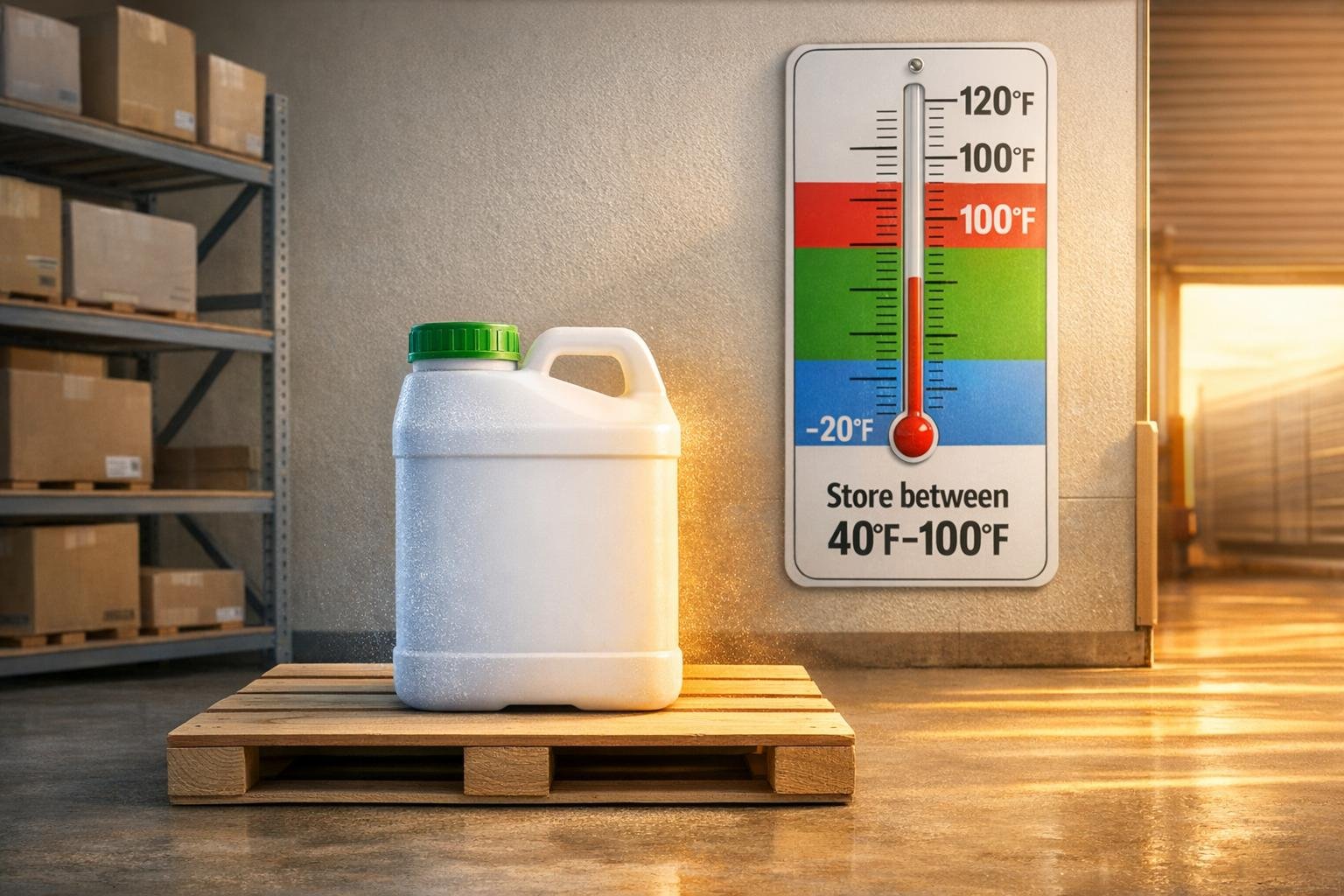
Pesticides lose effectiveness when exposed to temperature swings during transport and storage. This study reveals how freezing or overheating damages chemical stability, reduces pest control, and increases safety risks. Key findings include:
- Freezing temperatures cause crystallization and phase separation, making liquid formulations unusable.
- High temperatures lead to volatilization, pressure buildup, and faster degradation of active ingredients.
- Temperature changes affect pest resistance, with some pesticides becoming more toxic in heat while others lose potency.
- Proper handling and storage – keeping pesticides between 40°F and 100°F – are critical to maintaining their quality.
For applicators, temperature-controlled transport, adherence to label guidelines, and ongoing training are essential to prevent waste and ensure effective pest control.
Study Overview and Methodology
Research Scope
This study uses a systematic approach to explore how temperature stress affects pesticide performance. Researchers focused on several pesticide classes, including organophosphates (like chlorpyrifos), neonicotinoids (such as imidacloprid, nitenpyram, and cycloxaprid), and pyrethroids (bifenthrin and beta-cypermethrin). Additionally, triflumezopyrim, etofenprox, and pyriproxyfen were tested to ensure a broad representation of active ingredients commonly used in pest control.
To replicate real-world transportation conditions, the study simulated two temperature ranges: Low DTF (52–72°F) and High DTF (63–91°F), reflecting late spring and summer climates. These fluctuating conditions were compared to a stable laboratory temperature of 77°F to investigate the "delay effect" caused by temperature stress. In some instances, extreme temperatures – below 10°F and above 100°F – were applied to mimic worst-case transportation failures. These conditions provided the foundation for the chemical and biological analyses described below.
Methodology Highlights
Programmable climatic chambers were used to simulate realistic day–night temperature cycles, with gradual changes occurring over six-hour periods. Relative humidity in the chambers was maintained at 45%, aligning with the environmental conditions of various fruits: grapes (96%), blueberries (92%), and raspberries (86%).
Chemical stability was assessed using high-performance liquid chromatography (HPLC) alongside fingerprint analysis techniques like GC-MS and IR spectroscopy. For example, bifenthrin was subjected to accelerated aging at 130°F for 14 days, resulting in its active ingredient content dropping from 19.692% to 18.82%. Biological impacts were also evaluated through life-table parameters, including adult longevity, survival rates, fecundity, and the intrinsic rate of population increase. Additionally, researchers measured detoxification enzymes – such as cytochrome P450, GST, and CarE – to determine how temperature stress influences pesticide sensitivity. These combined techniques provided a comprehensive look at how temperature fluctuations affect pesticide degradation and efficacy.
sbb-itb-c4006de
Temperature Considerations for Pesticide Storage | From the Ground Up
Key Findings on Temperature Fluctuations
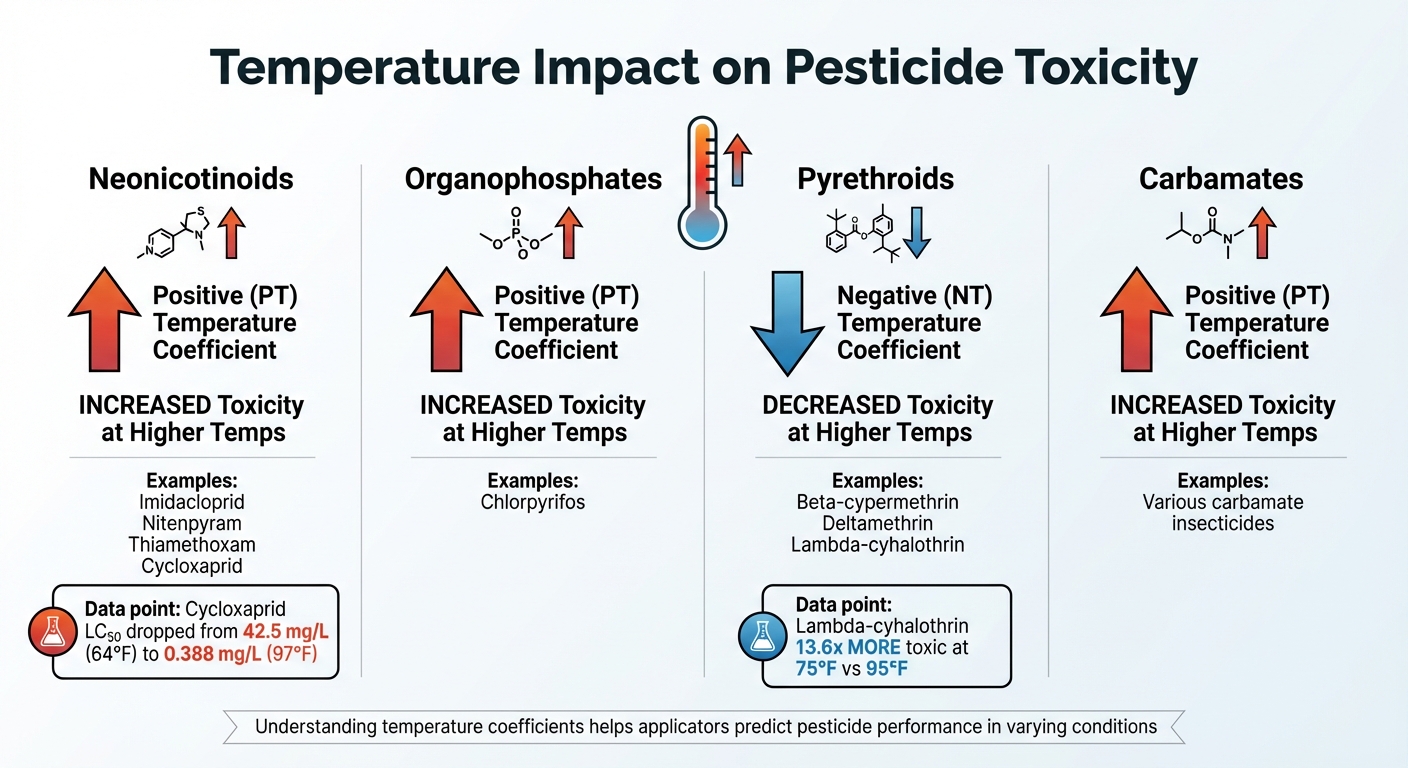
How Temperature Affects Different Pesticide Types: Toxicity Changes by Class
Impact on Chemical Stability
Temperature changes during transport and storage can significantly affect the stability of pesticide formulations. The type of pesticide formulation plays a major role – liquid products are much more prone to damage than dry ones. For instance, when temperatures drop below 40°F, some pesticides start forming crystals. In freezing conditions, active ingredients can separate from solvents and emulsifiers, leading to coagulation that makes the product unusable. These issues highlight how sensitive liquid formulations are to extreme conditions.
High temperatures are equally problematic. When the thermometer climbs above 100°F, chemicals can volatilize – turning into gas – which not only reduces the amount of active ingredient but can also cause dangerous pressure buildup inside containers. Additionally, in aqueous formulations, these degradation processes happen faster compared to non-aqueous ones when exposed to temperature swings. To maintain chemical stability, most pesticide labels recommend storing products between 40°F and 100°F. Deviating from these guidelines can weaken the product and even alter pest behavior.
Effects on Pest Resistance
Temperature fluctuations don’t just impact chemical stability – they also influence how pests respond to pesticides. A study in Pesticide Biochemistry and Physiology revealed that temperature can change a pesticide’s toxicity depending on its mode of action and the insect species involved. This is determined by temperature coefficients: pesticides with positive temperature (PT) coefficients – such as organophosphates, carbamates, and neonicotinoids – become more toxic as temperatures rise. On the other hand, those with negative temperature (NT) coefficients – mainly pyrethroids – lose effectiveness in hotter conditions.
For example, research conducted in May 2019 on the brown planthopper (Nilaparvata lugens) showed that sensitivity to cycloxaprid increased sharply as temperatures rose from 64°F to 97°F. The LC50 values dropped from 42.5 mg/L to 0.388 mg/L, indicating much higher toxicity. Meanwhile, the pyrethroid lambda-cyhalothrin was 13.6 times more toxic at 75°F compared to 95°F when tested against the European corn borer. These changes occur because temperature affects detoxification enzymes in pests, such as cytochrome P450 and glutathione S-transferase (GST), which play a key role in how insects metabolize pesticides.
| Pesticide Type | Coefficient | Effect of Temperature Increase | Examples |
|---|---|---|---|
| Neonicotinoids | Positive (PT) | Increased Toxicity | Imidacloprid, Nitenpyram, Thiamethoxam |
| Organophosphates | Positive (PT) | Increased Toxicity | Chlorpyrifos |
| Pyrethroids | Negative (NT) | Decreased Toxicity | Beta-cypermethrin, Deltamethrin, Lambda-cyhalothrin |
| Carbamates | Positive (PT) | Increased Toxicity | Various carbamate insecticides |
Mechanisms Behind Reduced Efficacy
Chemical Degradation Processes
To understand why pesticides lose their effectiveness during transport, it’s important to look at how temperature changes affect them. When temperatures fluctuate, chemical reactions that break down pesticides speed up. One key process is hydrolysis, where water causes the compounds to break apart. This process becomes much faster in outdoor storage with varying temperatures, reducing the concentration and potency of the active ingredients.
"Pesticide degradation occurred to a much greater extent after storage of the commercial formulation concentrates under outdoor conditions at extreme fluctuating temperatures, than after storage in the laboratory at a constant temperature." – KMS Sundaram, Natural Resources Canada
Water-soluble and liquid formulations are especially vulnerable to degradation under these shifting conditions.
Freezing temperatures create additional problems. When liquid formulations are exposed to temperatures below 40°F, phase separation can occur. This means active ingredients separate from solvents and emulsifiers, causing crystallization or coagulation. For instance, Pendimethalin can form crystals at the bottom of its container if stored below 40°F, while Imazapyr labels typically warn against storage below 10°F.
These chemical changes are just one part of the story. Temperature fluctuations also set off biological and environmental reactions that further reduce pesticide effectiveness.
Biological and Environmental Interactions
Temperature swings don’t just affect the chemicals – they also change how pests and the environment interact with pesticides. Research on damselfly larvae exposed to chlorpyrifos showed that daily temperature shifts of about 5°C (41°F) to 10°C (50°F) caused a six-fold increase in mortality and reduced growth rates by 115% compared to constant temperatures. This effect, called Climate-Induced Toxicant Sensitivity (CITS), highlights how environmental stress can amplify the toxicity of pesticides.
Temperature changes also stress pests in ways that affect pesticide performance. For example, fluctuating temperatures can drain pests’ energy reserves and disrupt enzyme activity. Enzymes like acetylcholinesterase, which regulate nerve function, may become inhibited, while detoxification enzymes like cytochrome P450 might become more active. These shifts can alter how pests metabolize pesticides, reducing their overall impact.
Environmental factors add another layer of complexity. High humidity, for example, can cause dry formulations to clump or dissolve too soon. On the other hand, changes in water chemistry – like increased water hardness – can sometimes stabilize certain active ingredients. Together, these chemical, biological, and environmental factors combine to weaken pesticide performance significantly.
Recommendations for Applicators
Temperature Control Best Practices
When transporting crop inputs like herbicides, pesticides, fungicides, fertilizers, and seed treatments, maintaining proper temperature is crucial. Using insulated or temperature-controlled trailers can help prevent exposure to extreme conditions (below 40°F or above 110°F) during long-haul trips.
"Temperature plays a critical role in the stability and performance of many crop inputs, including herbicides, pesticides, fungicides, fertilizers, and seed treatments." – Bison Transport
For optimal results, position containers to allow airflow and avoid direct contact with cold trailer walls. Secure your cargo using straps, avoid stacking higher than the vehicle sides, and cover paper or cardboard containers with waterproof materials to prevent moisture issues and temperature fluctuations.
Additionally, inspect the vehicle thoroughly before loading. Ensure the cargo area is clean, dry, and free of hazards. Carry essential items like a spill kit, proper labels, and Safety Data Sheets (SDS). It’s also critical to follow chemical freight standards and avoid transporting pesticides inside the vehicle cab to prevent exposure to harmful vapors.
To further protect these materials, minimize dwell time at cross-docks and strictly adhere to the storage guidelines listed on pesticide labels. These steps are key to maintaining the efficacy of pesticides throughout transport.
Educational Resources for Applicators
Proper equipment and handling techniques are essential, but ongoing education is just as important for applicators facing temperature control challenges. State-approved training programs provide valuable insights into managing pesticide formulations and their sensitivity to temperature.
For example, Online Pest Control Courses (https://onlinepestcontrolcourses.com) offers state-approved pesticide training. These courses provide Continuing Education Units (CEUs) and instant certificate downloads, helping applicators deepen their understanding of temperature-sensitive chemicals and apply this knowledge to transport and storage decisions.
In many states, completing this training can count toward restricted-use pesticide license renewals. Regularly participating in such programs keeps applicators updated on the latest research, best practices, and regulatory changes. This knowledge ensures that pesticides are handled and transported in ways that preserve their effectiveness and comply with safety standards.
Conclusion
Transporting pesticides under fluctuating temperatures can severely reduce their effectiveness. Research highlights how crucial it is to maintain recommended transport temperatures. For instance, pesticides degrade much faster when subjected to outdoor temperature swings compared to stable laboratory conditions. One study revealed that chlorpyrifos exposed to daily temperature fluctuations caused a sixfold increase in pest mortality and reduced larval growth by over 100%. These aren’t small differences – they can mean the difference between successful pest control and product waste.
The risks don’t stop there. Liquid formulations that freeze or overheat can become entirely unusable. Keeping pesticides within their specified temperature range is critical for preserving their effectiveness and ensuring applicator safety.
Temperature changes also influence how pests respond to these chemicals. Research into "climate-induced toxicant sensitivity" shows that daily temperature swings can significantly impact pesticide toxicity, proving that average temperatures alone don’t provide the full picture. This insight is vital for accurate risk assessments and successful pest management strategies.
To address these challenges, applicators should participate in regular, state-approved training programs. These programs help professionals navigate complex label instructions, understand temperature sensitivities of various formulations, and adjust methods based on weather conditions. For those looking to enhance their knowledge, Online Pest Control Courses (https://onlinepestcontrolcourses.com) offers state-approved CEU courses. These courses provide instant certificates that can count toward restricted-use pesticide license renewals in many states. Proper handling and ongoing education are essential to protect your investment, maintain product quality, and achieve effective pest control.
FAQs
How can I tell if a pesticide was damaged by freezing or heat?
When storing pesticides, always check the label for specific storage instructions. Freezing can lead to separation or crystallization, while high temperatures might reduce the product’s effectiveness, cause it to evaporate, or even harm its container. Keep an eye out for any noticeable changes in texture, consistency, or packaging, as these could indicate potential damage.
Which pesticide types work worse in hot weather versus cool weather?
High temperatures can weaken the effectiveness of pesticides like permethrin, as heat tends to diminish their potency. Similarly, bioinsecticides can also lose their performance quality when exposed to fluctuating temperatures. To ensure optimal results, it’s important to account for how temperature variations during transport and storage might impact these products.
What transport and storage steps best prevent temperature-related pesticide loss?
To keep pesticides effective and safe, store them in a cool, dry, and well-ventilated space where the temperature remains between 40°F and 100°F. Avoid exposing them to freezing temperatures or excessive heat, as these conditions can degrade their quality. Proper ventilation is also crucial to reduce vapor buildup, ensuring both safety and product reliability.