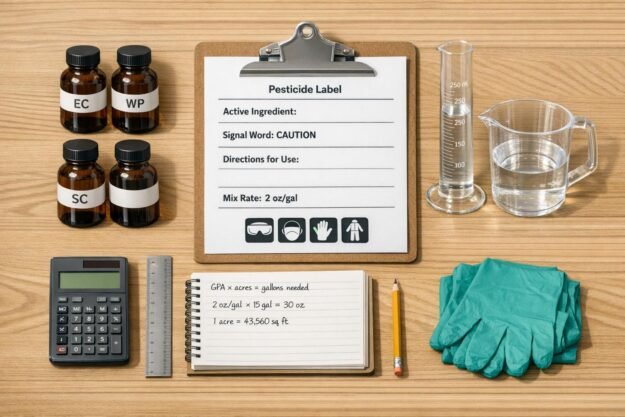
How to Prepare for Pesticide Formulations Exam
Master formulation types, label interpretation, mixing procedures, and application math to confidently pass the pesticide formulations exam.
Master formulation types, label interpretation, mixing procedures, and application math to confidently pass the pesticide formulations exam.

Compare five top digital tools for pesticide applicators that simplify compliance, mobile logging, GPS mapping, and inventory tracking.
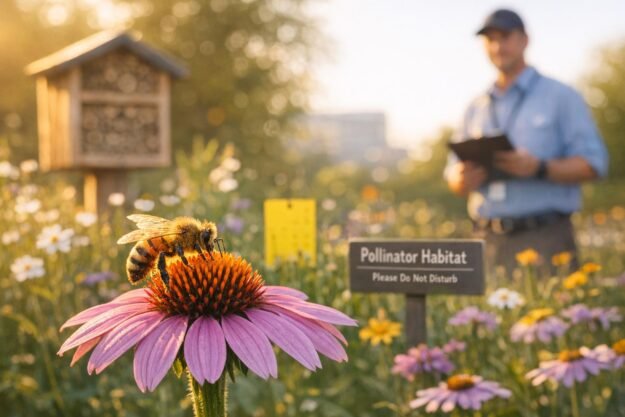
IPM strategies that protect pollinators and public health through monitoring, habitat changes, non-chemical tactics, and targeted, minimal pesticide use.
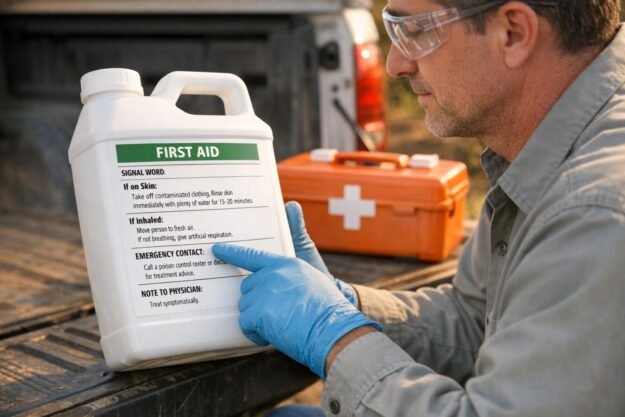
How to read pesticide first aid label sections: signal words, exposure-specific steps, emergency contacts, and physician notes for applicators.

Ethics training is essential: applicators must identify, disclose, and manage conflicts of interest to protect public safety and preserve professional integrity.

Choosing the right mix of jugs, nozzles, and gauges is essential to accurate pesticide application, reduced waste, and consistent results.

Federal and state buffer zone rules for pesticide applicators, covering AEZs, aerial vs ground limits, state variations, planning, and recordkeeping.

Check if your pesticide use meets local regulations with our easy tool. Input location and type for a quick compliance summary!
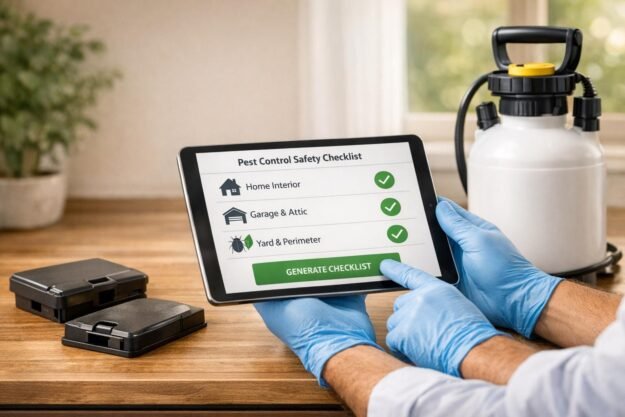
Create a custom pest control safety checklist in minutes! Ensure safe spraying, trapping, or baiting with tailored tips for your location and pest.
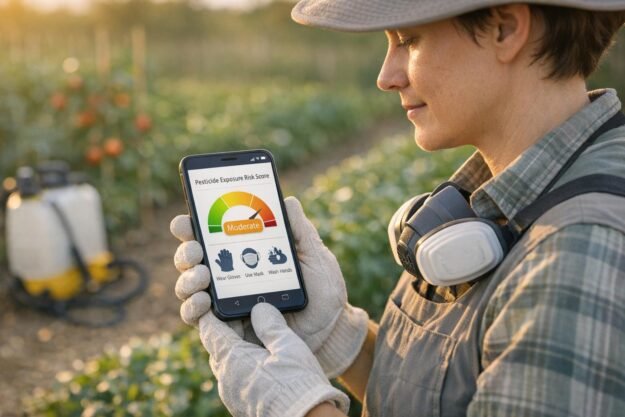
Calculate your pesticide exposure risk with our free tool. Get a personalized score and safety tips for farmers and gardeners in minutes!