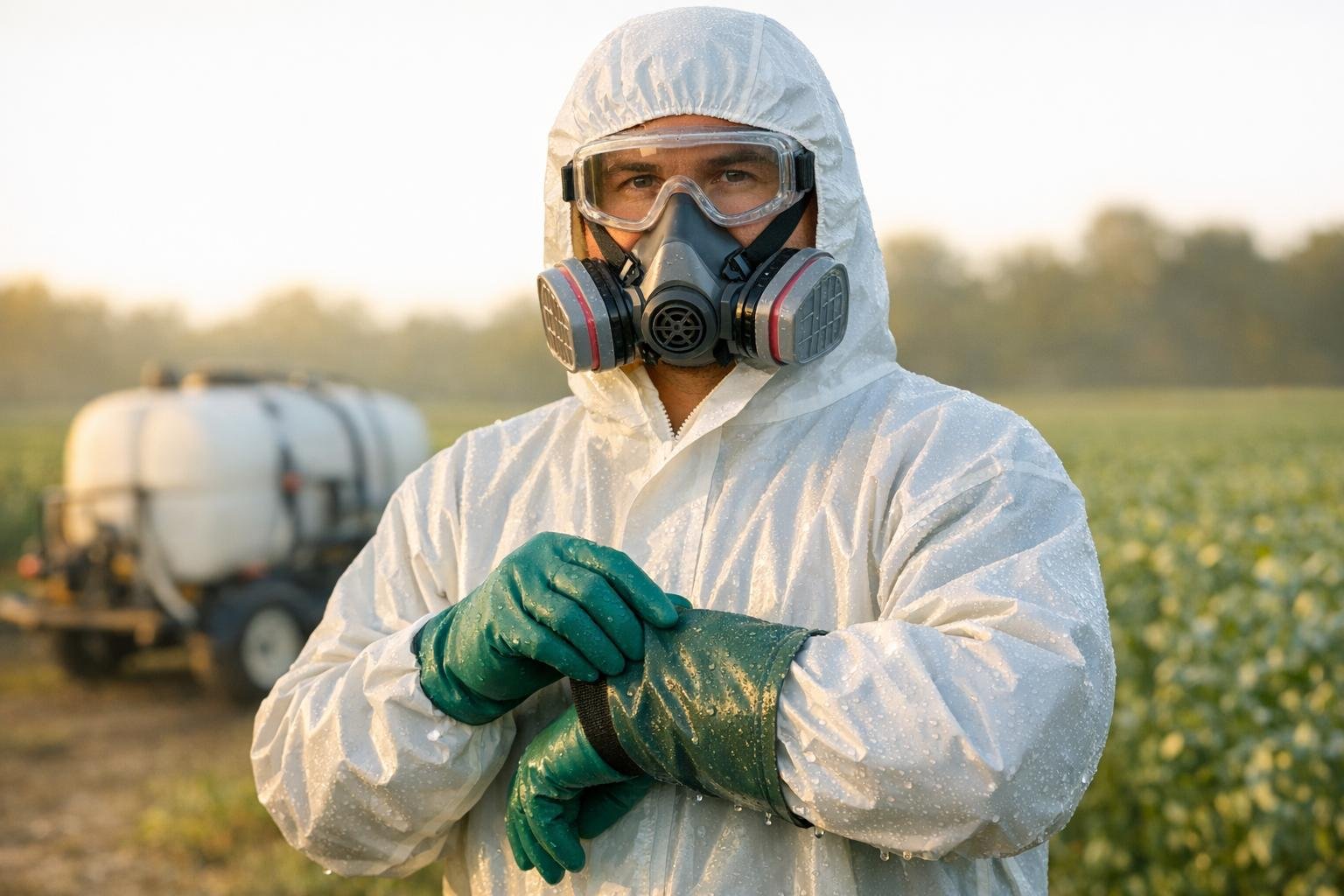
When working with liquid pesticides, personal protective equipment (PPE) is essential to prevent pesticide application hazards. Skin contact accounts for 97% of pesticide exposure during spraying, with hands and forearms being the most vulnerable areas. Proper gloves can reduce exposure by 98%, and other protective gear like goggles, respirators, and chemical-resistant suits provide additional safeguards.
Key Takeaways:
- Gloves: Use unlined, chemical-resistant gloves made of nitrile, butyl rubber, or PVC.
- Eye Protection: Goggles or face shields protect against splashes and mists.
- Respirators: NIOSH-approved respirators prevent inhalation of harmful fumes.
- PPE Care: Inspect, clean, and store equipment properly to maintain effectiveness.
Always follow the pesticide label for specific PPE requirements, including material types and toxicity guidelines. Wearing the correct PPE not only protects your health but also complies with legal safety standards.
Personal Protective Equipment for Pesticide Applicators
sbb-itb-c4006de
Reading Pesticide Labels for PPE Requirements
When it comes to pesticide safety, the label is your go-to guide for understanding Personal Protective Equipment (PPE) requirements. Whether you’re an applicator, mixer, loader, or flagger, it’s a legal obligation to follow every PPE instruction listed on the product label. These instructions outline the minimum gear required to safely handle the pesticide.
You’ll find PPE details in the "Precautionary Statements" section of the label. This section specifies what you need to wear when opening, mixing, or applying the product. The requirements are tied to the pesticide’s toxicity category (ranging from I to IV) and its signal word – terms like "DANGER-POISON", "DANGER", "WARNING", or "CAUTION." Products with higher toxicity levels demand more stringent protective measures.
Some labels also include an EPA Chemical Resistance Category code (A through H). These codes don’t just focus on the active ingredient but also consider the product’s solvents. For instance, if the label specifies "Category G", you’ll need to consult a resistance chart to identify suitable materials like barrier laminate or Viton. Labels may also clarify if gloves need to be waterproof or chemical-resistant, with materials such as nitrile or butyl rubber often recommended.
For respiratory protection, labels provide NIOSH "TC" prefix numbers (e.g., TC-84A or TC-23C) and filter codes (N, R, or P). Eye protection requirements can vary, too. Some products require goggles, while others allow shielded safety glasses that meet national standards, indicated by markings like "Z87.1" or "Z87+".
"The label is the law. Read it and wear the appropriate equipment."
– University of Missouri Extension
Always take time to read the label before handling any pesticide. Its instructions are tailored to the product’s specific risks and formulation. Up next, we’ll break down the PPE essentials for handling liquid pesticides.
Required PPE for Liquid Pesticide Application
When applying liquid pesticides, following label instructions is just the starting point. Proper personal protective equipment (PPE) is a must to ensure safety.
Chemical-Resistant Gloves
Since your hands and forearms are the most exposed, chemical-resistant gloves are a non-negotiable part of your PPE arsenal.
The best gloves for this job are unlined, liquid-proof, and made from synthetic materials like nitrile, neoprene, butyl rubber, or PVC. Fabric linings are a no-go because they can absorb pesticides, increasing your risk of prolonged exposure. Avoid gloves made of cotton, leather, or canvas – they soak up chemicals and hold onto them.
For liquid pesticides, choose gloves that extend to cover your wrists and forearms. Disposable nitrile gloves (11–15 mil thickness) cost about $1.00 to $1.50 per pair, while reusable ones are priced around $2.50 per pair. If you’re handling highly toxic chemicals, butyl rubber gloves offer extra protection, with prices ranging from $22.50 to over $60.00 per pair depending on thickness (7-mil to 35-mil).
To ensure safety, always test reusable gloves for leaks by filling them with water and checking for drips. If you’re working with your hands raised, roll the glove tops into cuffs or tape them to your sleeves to prevent pesticide runoff. After use, wash gloves with soap and water before removing them, and replace them if they show signs of wear, such as staining or tearing.
"The Agricultural Health Study has reported that wearing chemical-resistant gloves and changing your clothes after using pesticides may help prevent Parkinson’s disease."
– Clyde Ogg, Pesticide Safety Extension Educator
Once your hands are protected, turn your attention to safeguarding your eyes.
Eye Protection: Goggles and Face Shields
Your eyes are highly susceptible to absorbing chemicals, so protective eyewear is essential when handling liquid pesticides. Risks are particularly high during mixing and loading, where splashes are common.
Goggles provide a tight seal around your eyes, shielding them from splashes, mists, and vapors. Indirectly vented goggles are a smart choice if you need airflow to reduce fogging while maintaining protection. For situations involving volatile liquids or fine mists, opt for non-vented goggles that form a complete seal.
Face shields offer broader protection against large-volume splashes but may not be as effective as goggles for fine mists. If you prefer safety glasses, ensure they provide adequate coverage for the front, brow, and temples.
Make a habit of cleaning your eyewear after every use and storing it in a protective case to avoid scratches.
With your eyes covered, the next critical step is protecting your respiratory system.
Respirators and Masks
Respirators are essential for preventing the inhalation of pesticide vapors, fumes, and particles. Always use NIOSH-approved respirators marked with a "TC" number.
Choose the right filter for your respirator based on the type of pesticide. For example:
- P-series filters handle oil-based solvents.
- N-series filters are suitable for non-oily particulates.
- R-series filters offer limited protection against oil-based contaminants.
Before using a respirator, complete a medical evaluation to confirm you can safely wear it. An annual fit test by a qualified professional ensures a proper seal, and a user seal check should be done every time you put it on.
"Wearing more PPE than the label requires is allowed and often advisable, especially in high-risk situations. However, wearing less PPE than specified is both unsafe and a violation of federal law."
– Rachel Maccini, Extension Educator, University of New Hampshire
Filters in disposable respirators should be replaced after 8 hours of use unless specified otherwise. For gas- and vapor-removing cartridges, replace them immediately if you detect any odor, taste, or irritation. Proper training on respirator use and maintenance is critical, with annual retraining recommended.
Choosing PPE Materials for Liquid Pesticides
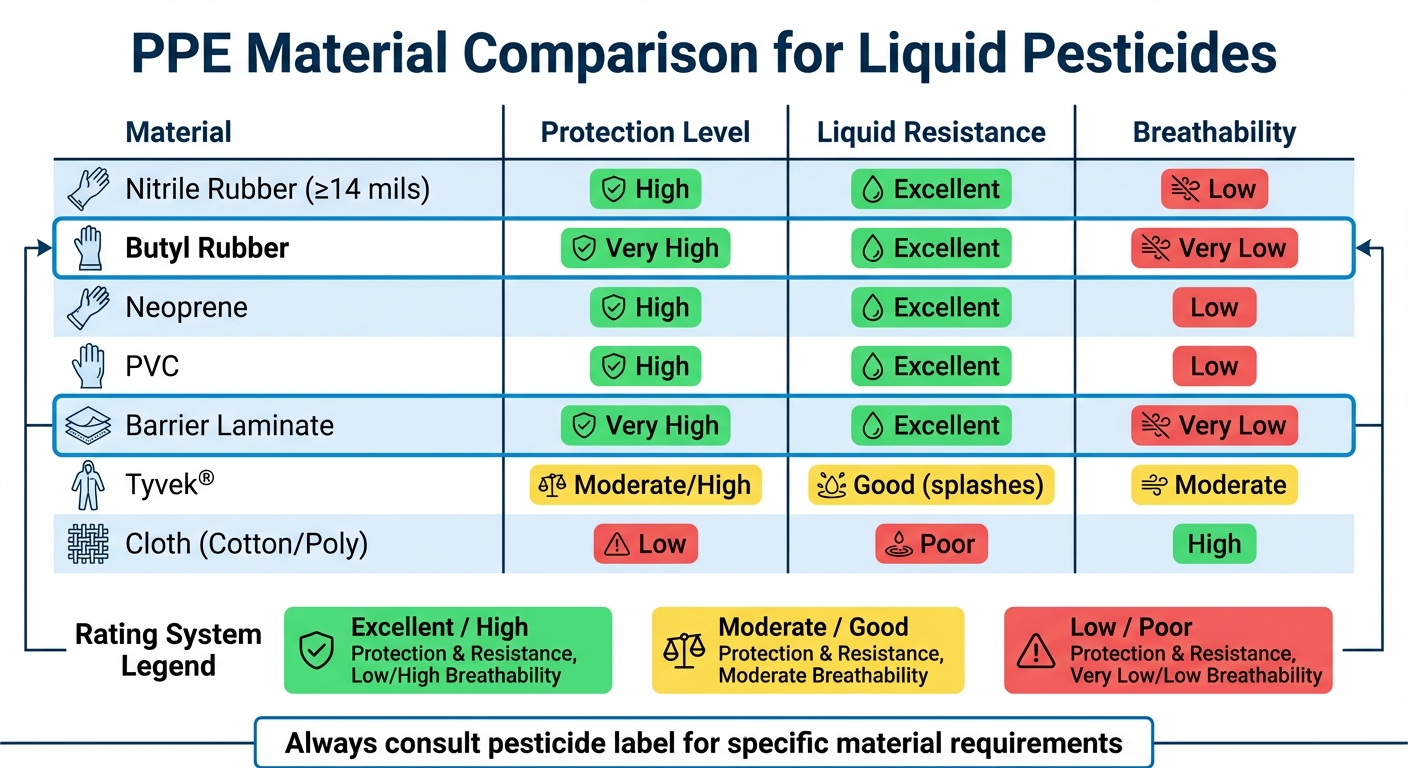
PPE Material Comparison Chart for Liquid Pesticide Protection
Once you’ve identified the essential PPE items, the next step is selecting materials that can effectively block liquid pesticides.
The pesticide label is your go-to guide. It specifies materials that are chemically resistant, meaning they prevent any measurable pesticide penetration. For example, some labels recommend nitrile gloves with a minimum thickness of 14 mils to ensure adequate protection. If you’re working with multiple pesticides, always adhere to the strictest requirements listed on the labels. This rule applies to all PPE, including gloves and suits.
"Chemical-resistant refers to materials that allow no measurable movement of the pesticide through the material."
– Elizabeth Danielson, Pesticide Safety Education Extension Specialist
For gloves, common chemical-resistant materials include barrier laminate, nitrile rubber, neoprene rubber, butyl rubber, polyvinyl chloride (PVC), and Viton®. Protective suits are often made from butyl rubber, neoprene, PVC, or polyethylene. In less hazardous scenarios, disposable coveralls like those made from Tyvek® offer a decent level of protection, while heavier-duty chemical-resistant suits are better suited for handling concentrated exposures.
It’s important to prioritize safety over comfort. Avoid flocked or lined gloves, as they can trap pesticides against your skin. Similarly, skip absorbent materials like baseball caps, and opt for a chemical-resistant hood or a wide-brimmed chemical-resistant hat. Leather boots are also a poor choice since they can absorb chemicals – use chemical-resistant boots or coverings instead.
PPE Material Comparison Table
Here’s a quick breakdown of the most common PPE materials and their properties:
| Material | Protection Level | Liquid Resistance | Breathability |
|---|---|---|---|
| Nitrile Rubber (≥14 mils) | High | Excellent | Low |
| Butyl Rubber | Very High | Excellent | Very Low |
| Neoprene | High | Excellent | Low |
| PVC | High | Excellent | Low |
| Barrier Laminate | Very High | Excellent | Very Low |
| Tyvek® | Moderate/High | Good (splashes) | Moderate |
| Cloth (Cotton/Poly) | Low | Poor | High |
Using, Cleaning, and Storing PPE
Proper care of PPE is essential to minimize pesticide exposure. Before every use, inspect all equipment for leaks, holes, tears, or worn areas. A quick daily check can make a big difference. If you notice any damage, either repair it immediately or replace the item. For reusable gloves, test them by checking for water leaks.
Always put on your PPE in a clean, pesticide-free area. Keep pant legs outside of your boots rather than tucking them in to stop liquid pesticides from running into your footwear. After applying pesticides, wash your gloves with detergent and water before removing the rest of your gear. This step ensures you don’t transfer contamination to your skin. Remove gloves last, then wash your hands thoroughly with soap and water. Follow up with a shower – about 97% of pesticide exposure during spraying occurs through skin contact, often involving different pesticide formulations.
Once your PPE is off, focus on cleaning and laundering it properly. Wash pesticide-exposed clothing separately from household laundry to avoid cross-contamination. Use a heavy-duty liquid detergent and hot water on the longest cycle, ensuring two rinse cycles. For heavily contaminated items, run them through two full wash cycles. Afterward, clean the washing machine by running an empty cycle with hot water and detergent. Air dry PPE in a well-ventilated space for at least 24 hours.
Reusable eyewear and respirators also need daily cleaning. Wash them with detergent and hot water, then sanitize by soaking in a bleach solution (2 tablespoons of chlorine bleach per gallon of hot water) for two minutes. Store respirators and cartridges in airtight, zip-closure plastic bags when not in use. Leaving them exposed to air reduces their effectiveness as they continue filtering impurities.
"Do not allow any handler to wear home or take home PPE contaminated with pesticides." – U.S. Environmental Protection Agency
Store clean and dry PPE in a ventilated area, away from personal clothing and pesticides. This keeps the equipment ready for use and prevents contamination. Never store PPE in the same area as pesticides, as the equipment can absorb harmful vapors. Chemical-resistant gloves generally last 5 to 7 workdays, while heavier-duty butyl or nitrile gloves can last 10 to 14 days. If coveralls or other absorbent materials become drenched with undiluted pesticides labeled "DANGER" or "WARNING", discard them immediately – they cannot be safely salvaged.
Conclusion
Personal protective equipment (PPE) plays a critical role in shielding the main entry points for pesticides – your skin, eyes, mouth, and lungs.
The pesticide label is your go-to resource for choosing the right PPE. This is because not all materials offer the same level of protection. For instance, something labeled as "waterproof" might not be "chemical-resistant", and using the wrong material could let harmful chemicals reach your skin.
To ensure PPE remains effective, regular inspections and proper cleaning are essential, as previously discussed. For example, chemical-resistant gloves typically last 5 to 7 workdays, while heavier-duty gloves can provide protection for up to 10 to 14 days.
Studies show that pesticide mixers experience 85% of their exposure on their hands and 13% on their forearms. Simply wearing gloves can cut exposure by at least 98% in the event of spills.
By carefully selecting the correct PPE, following label instructions, and maintaining your equipment, you create a strong barrier against pesticide exposure. These habits not only safeguard your immediate health but also help lower the risk of long-term health issues.
For more information and access to state-approved pesticide safety training, visit Online Pest Control Courses.
FAQs
How do I know which glove material works for my pesticide?
When handling pesticides, it’s crucial to check the product label for specific instructions on glove materials and thickness. Labels often suggest materials like nitrile, neoprene, butyl rubber, or barrier laminate, as each offers different levels of chemical resistance based on the pesticide’s formulation.
For pesticides containing organic solvents, nitrile or butyl rubber gloves are commonly recommended due to their durability and resistance to these chemicals. Always follow the label’s guidance to ensure you’re using the right gloves for maximum protection.
When should I replace respirator cartridges or filters?
Replace respirator cartridges or filters as soon as they reach their service life or if you notice signs of contaminant exposure, like unusual odors or irritation. Always follow the manufacturer’s guidelines and take workplace conditions into account. Never depend on your senses to identify contaminants – senses can often be misleading.
What should I do if liquid pesticide gets on my clothes or PPE?
If liquid pesticide spills onto your clothes or personal protective equipment (PPE), act quickly. Carefully remove the contaminated items to limit exposure. Wash the clothing thoroughly before wearing it again, or dispose of it safely if necessary. If the pesticide comes into contact with your skin, rinse the area with plenty of water for 15-20 minutes. If symptoms persist or you’re unsure, consult a medical professional. Regularly clean and maintain your PPE to ensure it provides proper protection.